


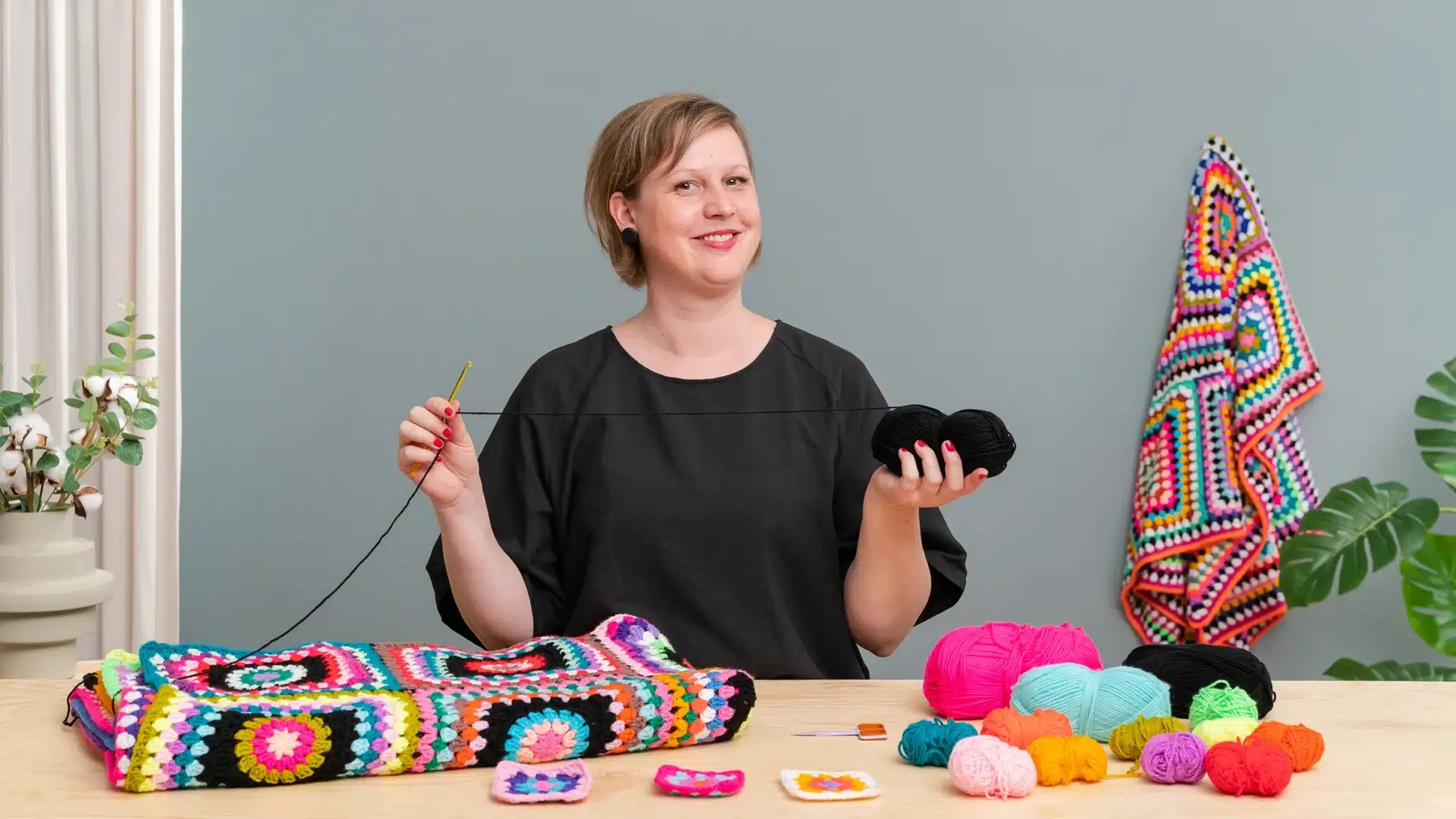
I learned to crochet from my grandmother, sitting on a couch that smelled faintly of lavender, making a scarf that was supposed to be straight and absolutely was not. Twenty years later I still crochet, and I can tell you this with confidence: there is no cozier entry point into the craft than boho crochet.
Boho, short for bohemian, is the free-spirited style of mismatched colors, flowing textures, tassels, fringe, and pieces that look collected rather than purchased. In crochet terms, it is the perfect beginner style, because boho forgives. Uneven tension? Call it texture. Colors that clash? Call it eclectic. A granny square blanket does not need to be perfect to be beautiful, which makes it the ideal first project.
This guide covers what boho crochet actually is, what a good online course should teach you, the materials you need, and how to go from “I have never held a hook” to a finished blanket or bag you are proud to show off.
What boho crochet actually is
Crochet is one of the oldest textile crafts: you build fabric loop by loop with a single hook and yarn. Boho crochet is a style applied to that craft. Think earthy and jewel tones mixed freely, open lacy stitches next to dense ones, granny squares joined into blankets, vests, and bags, finished with tassels, fringe, and wooden beads.
What makes it beginner-friendly is structural. Granny squares are small, portable, and quick to finish, so you get the dopamine hit of completing something every evening instead of grinding for weeks on one giant project. And because boho celebrates variety, your first wobbly squares look intentional next to your tenth neat ones. The style hides your learning curve while you build real skill.
What a good course should teach you
A boho crochet course worth paying for is not just a pattern with a camera pointed at it. Look for one that covers the full arc:
- The real basics, properly. How to hold the hook and yarn, chain stitch, slip stitch, single and double crochet. This sounds trivial until you realize most quitters quit here, because a bad grip makes everything harder than it needs to be. A good instructor spends real time on hand position.
- Reading patterns and charts. Crochet has its own language of abbreviations and symbols. A course that teaches you to read both written patterns and symbol charts gives you a skill that outlasts the course itself.
- The granny square, deeply. Not just one square, but variations: solid squares, lacy squares, flower motifs, color changes, and joining methods. This is the boho workhorse, and mastery here is mastery of the style.
- Color confidence. Boho lives or dies on color combinations. The best courses teach simple color theory, how to build a palette from a photo or a mood, and how to use variegated yarn without the result looking muddy.
- Assembly and finishing. Joining squares invisibly, adding borders, blocking (gently shaping finished pieces with water or steam), attaching tassels and fringe. This is the difference between “homemade” and “handmade.”
- A finished project. Ideally a blanket or a bag, built from your squares, that proves the whole pipeline works.
Materials: the honest shopping list
Crochet is one of the cheapest crafts to start. You need:
- Yarn. For your first projects, a smooth medium-weight (worsted/aran) acrylic or cotton-acrylic blend in light or medium colors. Dark yarn hides your stitches and makes learning miserable. Buy more than you think you need in the same dye lot.
- Hooks. Start with one ergonomic hook in the size your yarn recommends (usually 4.5-5.5 mm for worsted). You do not need a set yet.
- A tapestry needle for weaving in ends, scissors, and stitch markers (safety pins work fine).
That is genuinely it. Skip the fancy kit with seventeen gadgets. The craft is 200 years old; it was designed to be done with almost nothing. If you ever want to turn the hobby into something more, this guide to starting a craft brand covers the business side, and the principles transfer directly.
How to choose the right course
There are thousands of crochet tutorials on video platforms, and many are excellent, so why pay for a course? Structure. Free tutorials teach you one square. A good course teaches you the craft in order, with an instructor who anticipates the exact moment your square starts curling into a bowl and tells you why.
- Preview the teaching style. Watch free lessons. The instructor should show their hands clearly, work slowly through the tricky stitches, and explain why, not just demonstrate.
- Check the project scope. “Make a blanket or bag from granny squares” is a real, finishable goal. “Learn 200 stitches” is a reference book, not a course.
- Look for troubleshooting content. Curling edges, uneven squares, running out of yarn mid-row: courses that address these explicitly were made by someone who has actually taught beginners.
- Community matters. Courses with active student groups or Q&A are worth more, because crochet problems are much easier to diagnose with a photo than with a search engine.
Not sure whether to go free or paid? This breakdown of free courses versus paid courses will help you decide when it is worth opening your wallet.
A practice routine that fits real life
Crochet is the rare craft that fits into the cracks of a day: one square during a show, a few rows on a commute, ten minutes before bed. That portability is a superpower if you use it deliberately.
- Learn one stitch at a time. Master the chain and single crochet before touching a granny square. Rushing the foundations is the number one reason beginners produce lopsided work and conclude they are “just bad at this.”
- Make swatches, not commitments. Practice color changes and new stitches on small swatches. They become a personal reference library you will consult for years.
- Finish small things often. A coaster, a mug rug, a single motif. Finished objects teach you the full cycle, ends woven in, blocked, done, in a way that endless practice rows never do.
- Keep a “learning” project and a “fun” project. When the learning project frustrates you, switch to the fun one. You will come back fresher.
Mistakes every beginner makes (and how to dodge them)
- Death-gripping the hook. Tension should come from how the yarn flows through your fingers, not from strangling the tools. If your hand cramps, you are holding too tight.
- Skipping the turning chain count. Most lopsided rectangles come from accidentally adding or dropping a stitch at the row ends. Count. Use stitch markers at the edges until counting is automatic.
- Starting with dark, fuzzy, or novelty yarn. It is pretty in the store and invisible in your hands. Learn on smooth, light-colored yarn, then graduate to the fun stuff.
- Never blocking. Blocking, lightly wetting or steaming finished pieces into shape, is the step that makes handmade look professional. It takes ten minutes and changes everything.
- Comparing your week one to someone’s year ten. The gorgeous boho blankets online took hundreds of hours. Your first square just needs to exist.
Frequently asked questions
Is crochet harder than knitting?
Most beginners find crochet easier to start: one hook instead of two needles, and mistakes are simpler to fix because you only ever have one live loop. Knitting produces stretchier fabric, but for boho texture and speed of learning, crochet wins.
How long does it take to make a granny square blanket?
A throw-size blanket is typically 60-100 squares. At one or two squares an evening, that is one to three months of relaxed stitching. It sounds like a lot until you realize the squares are the fun part, and joining them at the end feels like assembling a puzzle you made yourself.
Can left-handed people crochet?
Absolutely. Many instructors offer mirrored demonstrations, and left-handed crocheters are common. The craft is fully ambidextrous once you learn your own hand positions.
What if I want to sell my work eventually?
Boho crochet sells well at markets and online because every piece is visibly handmade. Start by gifting pieces to build a portfolio of photos, learn what people actually ask for, and read up on turning learning into income before you price anything.
Boho crochet rewards the exact mindset beginners have: curiosity over precision, color over rules, finished over perfect. Pick up a hook, make one ugly square, then make a better one. The blanket builds itself one evening at a time.