




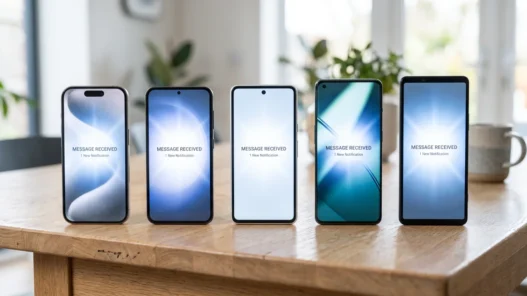
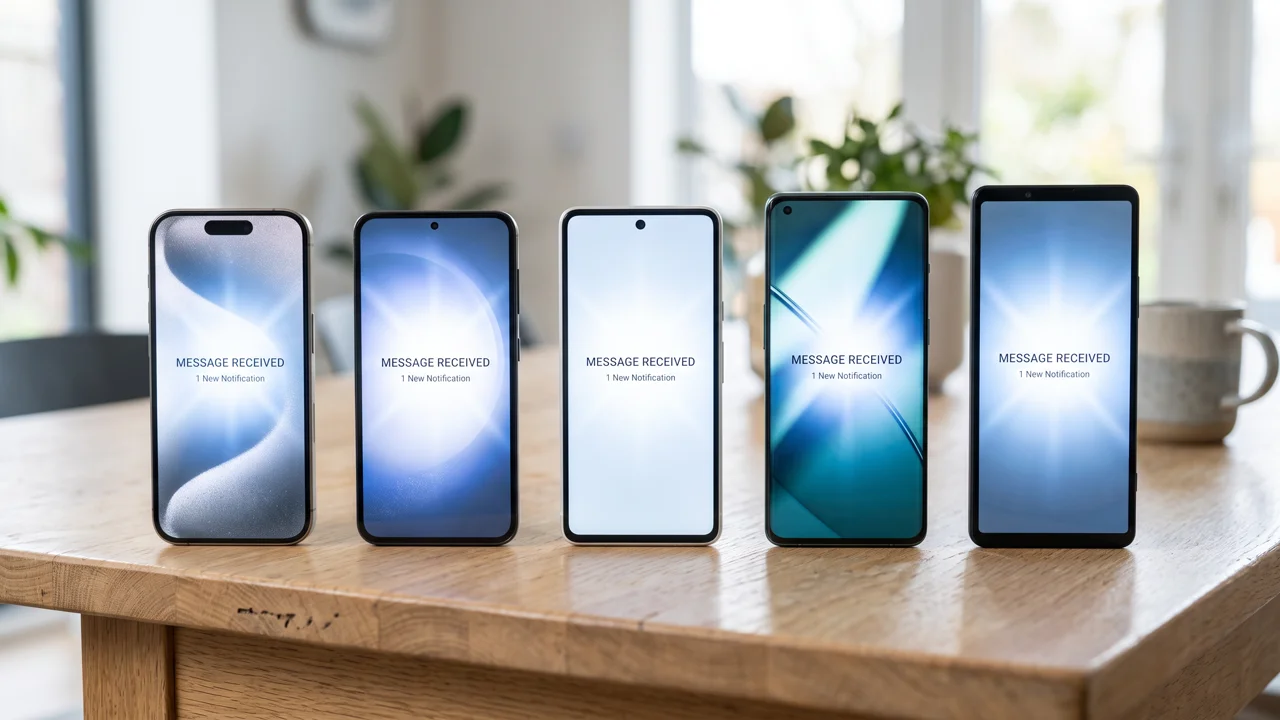
Think about the last time your phone buzzed in a quiet room. Now think about every other phone you’ve ever heard buzz in a quiet room. Notice something? They all sound… basically the same. A bright little ding, a soft bloop, a chirp. Across brands, across continents, across a decade of supposed innovation, the notification sound has barely changed.
That’s not a lack of imagination. It’s one of the most carefully engineered sounds in your life. Here’s the data behind the ding.
Your ears have a favorite frequency — and tech companies know it
Human hearing isn’t equally sensitive to all pitches. We’re most sensitive to frequencies between roughly 2,000 and 5,000 Hz — the range of a baby’s cry and, not coincidentally, much of human speech. Evolution tuned us to notice sounds in this band because ignoring them used to be dangerous.
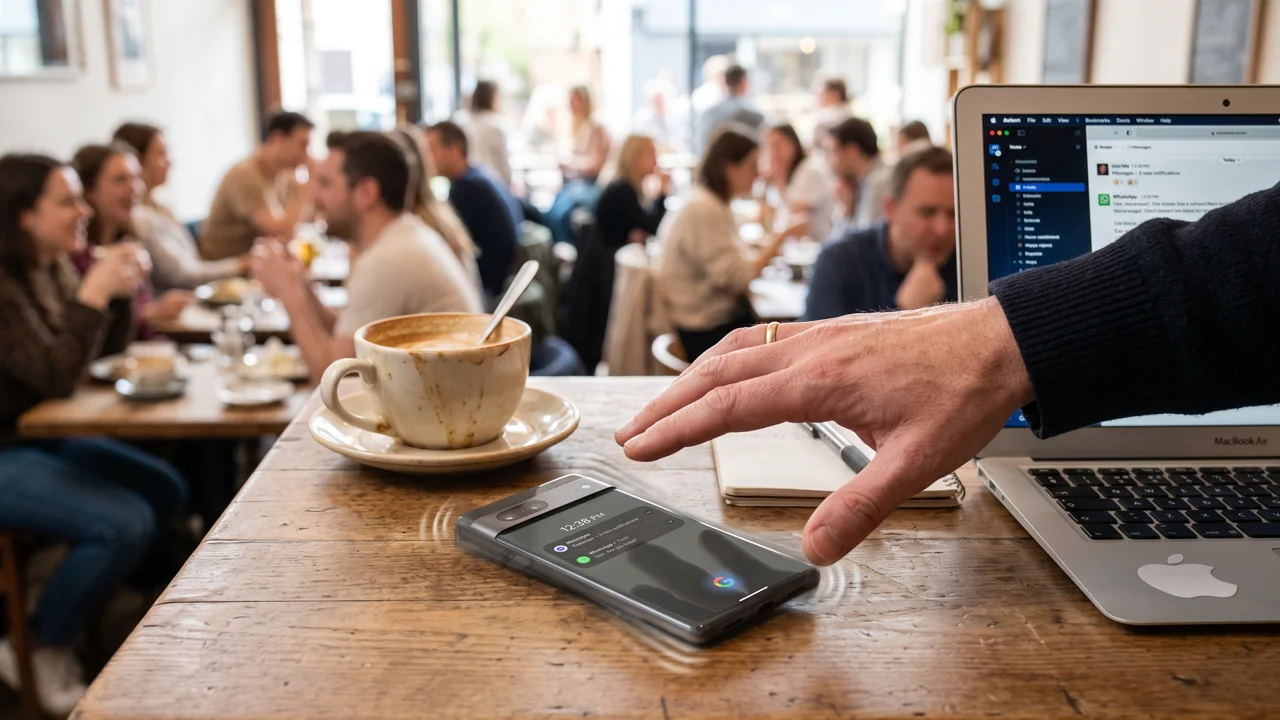
Now look at notification sounds: the iPhone’s classic “Tri-tone,” the default Android ping, the Slack knock, the Discord boop. Almost all of them sit squarely in that 2–5 kHz sweet spot. That’s why a notification cuts through a noisy café, a running shower, or a conversation — it’s pitched exactly where your auditory system can’t ignore it. Designers didn’t stumble into this; audio engineers at companies like Apple and Microsoft have spent years shaping these sounds, testing how they perform at low volumes, through cheap speakers, and in noisy environments.
The result is convergent evolution: every company independently arrives at the same acoustic solution, the way sharks and dolphins independently arrived at the same body shape. Different teams, same physics, same ding.
The numbers: how often that sound hijacks your brain
Here’s where it gets uncomfortable. Researchers studying smartphone habits have produced a wide range of estimates, but they all point the same direction: most people check their phones somewhere between 80 and 150+ times a day, depending on the study, the year, and how “checking” is defined. Some recent estimates push even higher for younger users.
Do the math on the low end: 80 checks across 16 waking hours is once every 12 minutes. And notifications are the engine of that loop. Each ding delivers a tiny hit of unpredictability — maybe it’s a message from your crush, maybe it’s a coupon — and unpredictability is the most addictive reward schedule known to psychology. Slot machines run on the same principle. Your phone is a slot machine tuned to 3,000 Hz.
This is also why “phantom vibrations” happen: studies have found that a large majority of regular phone users — in some surveys up to 80–90% — have felt their phone buzz when it didn’t. Your brain has learned the pattern so well it starts hallucinating the cue. That’s not a glitch; it’s your auditory attention system doing exactly what the sound designers trained it to do.
Why they can’t just make them… nicer?
Fair question. If the ding is so annoying, why not replace it with something pleasant — ocean waves, a soft chime, birdsong? Companies have tried. Here’s why the classics survive:
1. Recognition beats beauty. A notification sound has one job: instant identification. In user testing, pleasant ambient sounds consistently lose to short, distinctive pings because the brain files them as background noise. The sound needs a sharp attack — a fast onset — to register as an event. Gentle fades get ignored, which defeats the purpose.
2. Length is the enemy. The ideal notification is under a second — many are around 0.3 to 0.8 seconds. Anything longer feels intrusive when it fires 80+ times a day, and anything shorter doesn’t register. That tiny window leaves almost no room for musical creativity. There are only so many ways to be distinctive in half a second at 3 kHz.
3. Consistency is a feature. When Apple changed its default sounds, users complained — not because the new sounds were worse, but because the old ones were wired into reflexes. Tech companies learned that changing the ding breaks millions of trained habits at once. So the sounds stay frozen, like a brand logo you can’t redesign without a riot.
The attention economy runs on this sound
Step back and the picture gets bigger. Notifications aren’t just sounds; they’re the delivery mechanism of the attention economy. Every ding is a bid for a slice of your focus, and your focus is the product being sold to advertisers. The sameness of the sounds isn’t just physics — it’s economics. Every app wants its notification to trigger the same Pavlovian reach-for-the-phone reflex that the operating system’s own sounds built.
This is why the most effective response isn’t a better sound — it’s fewer sounds. Turning off non-essential notifications is consistently the highest-impact focus intervention in productivity research, ahead of app blockers and screen-time dashboards. If you want the full system for taking back your attention, our comparison of distraction blockers like Cold Turkey vs. Freedom picks up where this leaves off — and if you want to make focus feel less like a chore, gamifying it with the Forest app actually works for a lot of students.
So what can you actually do about the ding?
You can’t redesign the physics of human hearing, but you can renegotiate the terms:
- Audit ruthlessly. Go through your notification settings and ask of each app: “does this need to interrupt me in real time?” For most apps, the answer is no. Messages from actual humans: yes. A retail app’s “sale ends tonight”: absolutely not.
- Use custom sounds as filters. Assign a distinct tone to your VIPs — family, close friends — and let everything else share the generic ding. Your brain will learn the difference within days, and the generic ding will start to mean “ignorable.”
- Schedule silence. Both iOS and Android now offer focus modes that batch notifications. A ding you chose to receive at 6 p.m. hits differently than one that ambushed you mid-lecture.
The notification sound sounds the same everywhere because it was engineered — by physics, by psychology, and by profit — to be the one sound you can’t ignore. Understanding the machinery is the first step to deciding when it gets to run. The ding isn’t going anywhere. But it doesn’t have to run your day.