








It’s 6:47 PM. You just got home, dropped your bag, and stood in the kitchen eating crackers straight from the box because dinner felt like too much effort. Somewhere in the back of your mind, a voice says: you were supposed to study tonight.
You open the course app. Lesson 12 stares at you. Your eyes glaze over by the second paragraph, and twenty minutes later you’re watching someone renovate a van on YouTube. The voice in your head upgrades from reminder to lecture.
Here’s what I want you to hear: you’re not lazy, and you’re not bad at learning. You’re trying to study with an empty tank, using a routine designed for someone with a completely different life. Let’s build one that actually fits yours.

The Real Problem Isn’t Time. It’s Energy.
Every “learn after work” guide starts with time management, and that’s why most of them fail. You don’t have a time problem — you have 24 hours like everyone else. You have an energy problem.
Think about it: at 9 AM on a Saturday, an hour of studying feels almost pleasant. At 9 PM on a Wednesday, after eight hours of work and an hour of commuting, that same hour feels like punishment. Same 60 minutes, completely different person sitting in the chair.
So the first step isn’t finding time. It’s being brutally honest about when your brain still works.
The 3-day energy audit
For three days, rate your mental energy 1–5 at three moments: when you get home, after dinner, and right before bed. Don’t overthink it — just a number in your phone’s notes app. Patterns emerge fast. Most people discover one of these:
- The morning person in denial: dead by 8 PM, but weirdly alert at 6 AM. You’ve been forcing evening study for years. Stop. Study before work.
- The lunch-break learner: decent energy midday, crashed by evening. Your 30-minute lunch break is prime learning real estate.
- The night owl: genuinely functional at 10 PM. Everyone told you to study “before you’re tired,” but your tired and their tired are different things.
There’s no moral hierarchy here. The best study time is the time you’ll actually use — not the time productivity gurus use.
Three Routines That Actually Work
Pick the one closest to your life. Steal it wholesale or remix it — these are starting points, not religions.
Routine A: The Early Bird (for the 6 AM crowd) 🌅
- 6:00–6:30 — Study session #1. One lesson or one focused practice block. Phone in another room.
- 12:30–12:45 — Lunch review. Glance at this morning’s notes; quiz yourself on one thing.
- Evening — Nothing. You’re done. This is the whole point.
Total: ~45 minutes. Why it works: you front-load learning when willpower is highest, and evenings stay guilt-free. People who switch to mornings often tell me the strangest thing — they start looking forward to it, because it’s the only part of the day that belongs entirely to them.
Routine B: The Lunch-Break Sniper 🎯
- 12:00–12:25 — Study block. Short video lesson or one practice exercise. Eat at your desk after, or eat first and study second — experiment.
- Commute — Audio review. Re-listen to a lesson, or use a podcast on your topic.
- One weekend morning — 90-minute project session to apply the week’s bits.
Total: ~2.5 hours/week. Why it works: it exploits time that was previously dead (scrolling, small talk) and the weekend session turns fragments into real skill. Perfect if evenings belong to family.
Routine C: The Night Owl (for the genuinely nocturnal) 🦉
- 9:30–10:15 — Main session. Your brain’s second wind is real; use it.
- Weekend — One longer creative session for projects.
- Rule: no screens-after-midnight doom spiral. Session ends, book or wind-down begins.
Total: ~4 hours/week. Why it works: it stops fighting your chronotype. The guardrail matters more than the schedule — night owls don’t fail from studying late, they fail from studying late and then losing another hour to their phone.

The Micro-Learning Toolkit
Some days, even 25 minutes won’t happen. That’s fine — as long as you have a smaller gear to shift into. Build yourself a menu of tiny options:
- 5 minutes: review flashcards, re-read yesterday’s notes, watch one short video at 1.5x.
- 10 minutes: do one practice exercise, write a 3-sentence summary of the last lesson from memory.
- 15 minutes: complete one full lesson, or redo one tricky exercise slowly.
The rule: never miss twice. Miss Monday? Fine — life happens. But Tuesday you do the 5-minute version, no negotiation. Two misses in a row is how courses die; one miss is just a rest day with a story.
This pairs beautifully with choosing the right course format in the first place — short, project-based lessons survive busy weeks far better than hour-long lectures.
Design Your Environment Like You Mean It
Willpower is overrated; friction is everything. A few embarrassingly simple tweaks:
- The 20-second setup: leave your study tab open, notebook out, course app logged in. If starting takes more than 20 seconds, you’ll negotiate your way out of it.
- Phone exile: not silenced — exiled. Another room. Studies keep showing that even a face-down phone on the desk drains focus. Your brain keeps one eye on it.
- The shutdown ritual: when the session ends, write tomorrow’s starting point on a sticky note (“resume at lesson 14, exercise 3”). Future you will thank present you — starting is 80% of the battle, and a specific starting point removes the “where was I?” dread.
- Fuel, not junk: keep water nearby. The 9 PM snack attack is real; a handful of nuts beats the cracker-box dinner that leads to the couch coma.

Troubleshooting: When the Routine Breaks
“I keep falling asleep.” You’re either sleep-deprived (fix the sleep first — no routine survives chronic exhaustion) or studying too late for your biology. Try moving the session 60–90 minutes earlier, or switch to mornings for two weeks as an experiment.
“Work has been insane for three weeks.” Drop to the 5-minute gear without guilt. Five minutes of flashcards keeps the neural thread alive; zero minutes lets it snap. When the crunch ends, ramp back up — don’t try to “make up” lost time with a marathon session. Marathons cause the next burnout.
“My family needs me in the evenings.” Then evenings aren’t yours, and that’s okay. The lunch-break or early-morning routines exist precisely for this. Have an honest conversation at home: “I need 30 minutes, three times a week, for something that matters to me.” People are usually more supportive than we fear — especially when they see it making you happier.
“I started strong and faded after a month.” Classic. The novelty wore off, which means the routine needs to get easier, not harder. Shrink the sessions. Add variety — a different, hands-on course, a study buddy, a project with a deadline. Motivation follows action more often than the reverse.
A Note on Weekends
Don’t study “whenever you feel like it” on weekends — that’s how weekends evaporate. Block one focused session (60–90 minutes) and protect it like an appointment. The rest of the weekend is yours, genuinely free, no guilt attached. That guilt-free rest is what makes Monday’s session possible.
If you’re learning something creative, weekends are golden for the fun stuff — the messy, experimental practice that doesn’t fit in a 25-minute weeknight slot. Setting up your space and resources once means every session starts instantly instead of with twenty minutes of hunting for supplies.

The 15-Minute Sunday Reset
Routines rot silently. You skip Tuesday, then Thursday feels optional, and by next month the calendar blocks are decorative. The fix is a tiny weekly review — 15 minutes every Sunday — that keeps the system honest.
Grab a coffee and answer four questions:
- How many sessions did I actually do? No judgment, just a number. You’re collecting data, not confessing.
- What got in the way? Look for patterns, not excuses. If “too tired after dinner” shows up three weeks running, that’s not a willpower failure — it’s information telling you to move the session.
- What’s one thing I’ll change? Only one. Smaller time slot, different location, new course format — pick the single tweak with the biggest payoff.
- What did I actually learn? Write down one concrete thing you can now do that you couldn’t do last Sunday. This is the antidote to the “I’m not progressing” feeling that kills more routines than any schedule conflict.
Keep these notes somewhere — a notes app, a paper journal, anywhere. After two months you’ll have a little log of your own learning journey, and on the weeks when motivation dips, reading back through it is remarkably effective. Progress you can see is progress you’ll protect.
Start Absurdly Small Tonight
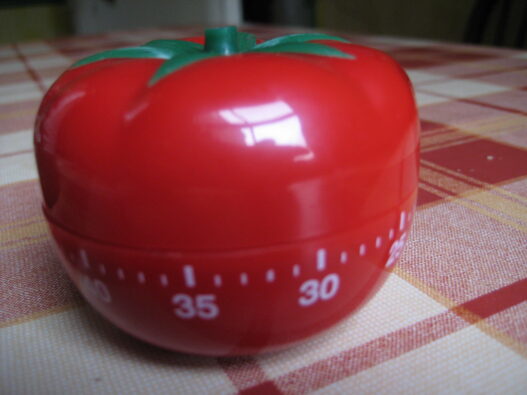
Here’s my challenge: tonight, do exactly 10 minutes. Not an hour, not “as much as I can” — 10 minutes, timer on, phone exiled. Then stop, even if you’re on a roll (especially if you’re on a roll — you’ll come back hungry tomorrow).
Do that three times this week. That’s 30 minutes of real learning, which is 30 minutes more than the guilt-and-YouTube cycle produces. Next week, make it 15. The routine that survives is the routine that starts small enough to survive.
You’re not behind. You’re just getting started — on purpose this time. 💪