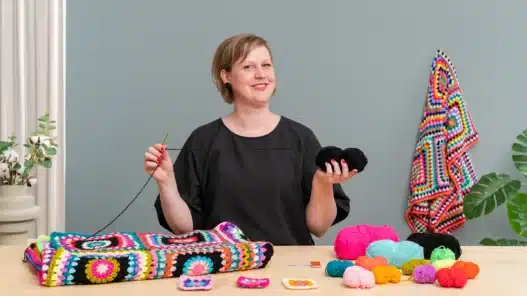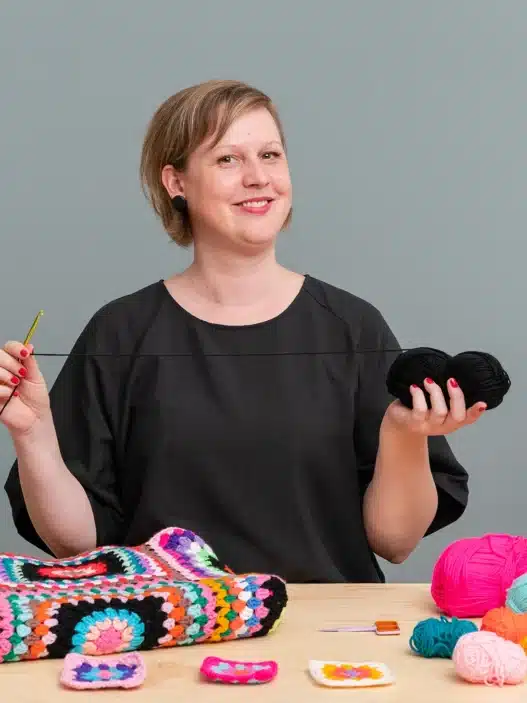







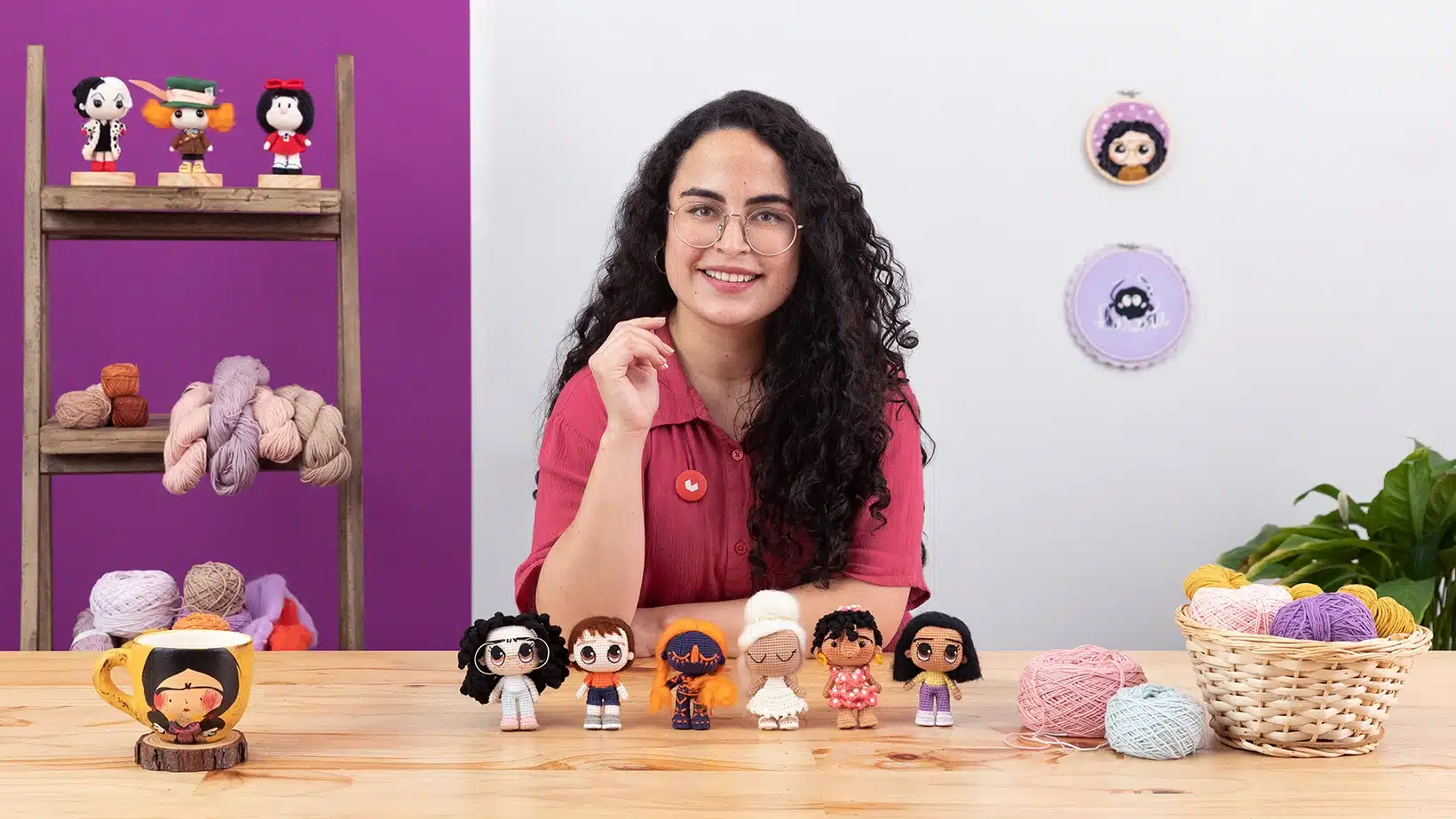
Amigurumi — the Japanese art of crocheting small stuffed creatures and people — has a superpower most crafts don’t: the finished objects make people smile involuntarily. A lumpy first attempt still gets an “aww.” A good one gets photographed. And somewhere between those two points, crocheters discover that amigurumi is also one of the most portable, affordable, and forgiving crafts you can learn online.
If you’ve ever wanted to crochet but felt intimidated by blankets and garments (so. many. stitches.), amigurumi is the friendlier door in. Projects are small, techniques repeat constantly, and you can learn the entire foundation from a single good course. Here’s your roadmap.
What amigurumi actually is
The word combines the Japanese ami (crocheted/knitted) and nuigurumi (stuffed doll). In practice, it means crocheting in continuous rounds to form three-dimensional shapes — spheres for heads, tubes for limbs — then stuffing and assembling them into characters.
Here’s why it’s ideal for beginners: almost every amigurumi pattern uses the same tiny set of stitches. Learn them once and you can make hundreds of different designs. Compare that to garment crochet, where every pattern introduces new techniques, and you see the appeal.
The only stitches you need (seriously)
Master these six and you’re set for 90% of patterns:
- Magic ring — the adjustable loop every amigurumi starts with. Fiddly for about ten minutes, then automatic.
- Single crochet — the only stitch used for the vast majority of amigurumi. If you can do this, you can do amigurumi.
- Increase — two stitches in one, to widen shapes.
- Decrease (invisible decrease) — to narrow shapes cleanly without gaps.
- Slip stitch — for joining and finishing.
- Chain stitch — occasionally needed for starting pieces and details.
That’s the whole technical foundation. Everything else — color changes, embroidery details, attaching parts — is assembly and decoration. A good course will have you practicing these on simple spheres before any character appears, which feels slow for exactly one evening and then pays off forever.
Reading patterns without panicking
Amigurumi patterns look like code at first: “Rnd 4: [sc in next st, inc] x6 (18)”. It’s simpler than it looks:
- Rnd = round. You’re working in a spiral.
- sc = single crochet. inc = increase. dec = decrease.
- x6 = repeat what’s in brackets six times.
- (18) = you should have 18 stitches when the round is done. Count. This number is your error detector.
Use a stitch marker (a paperclip works) to mark the start of each round, and count your stitches at the end of every round. Ninety percent of amigurumi disasters are just lost stitches compounding silently. Counting feels tedious; frogging (ripping out) three rounds feels worse.
Materials: start simple
- Worsted-weight acrylic yarn — cheap, consistent, and forgiving. Save the fancy cotton for later.
- A crochet hook one or two sizes smaller than the yarn label suggests — this creates the tight fabric that keeps stuffing from showing through. For worsted yarn, that’s usually a 3.5–4mm hook.
- Polyester fiberfill — stuff firmly. Under-stuffed amigurumi look sad and lumpy; don’t be shy with it.
- Safety eyes (or embroidery thread) — safety eyes give that classic cute look; embroidered eyes are safer for toys meant for small children.
- Stitch markers, a yarn needle, and small scissors — the supporting cast.
Total startup cost: less than a pizza night. Amigurumi might be the cheapest craft on this entire site to begin.
Choosing an online amigurumi course
Look for courses that teach people/characters specifically if that’s your goal — general crochet courses spend weeks on scarves before touching 3D shapes. A strong amigurumi course:
- Starts with stitch fundamentals on practice shapes, not a character on day one.
- Teaches pattern reading explicitly — this is the skill that unlocks every future project.
- Covers assembly: attaching limbs, embroidering faces, and positioning features. Assembly is where “collection of crocheted balls” becomes “character,” and beginners consistently underestimate it.
- Includes at least one complete character project you finish during the course.
- Shows common mistakes close-up — gaps from loose decreases, lopsided stuffing — and how to fix them.
Video matters enormously here. Crochet is a hand-position craft; you need to see exactly how the instructor holds the hook and tensions the yarn. Blurry or distant footage is a dealbreaker.
Your first month, mapped out
- Days 1–3: chains and single crochet rows. Just get comfortable holding hook and yarn.
- Week 1: magic ring and crocheting in the round. Make spheres — lopsided spheres are fine.
- Week 2: increases and decreases. Make a simple ball with intentional shaping.
- Week 3: your first tiny project — a simple octopus or bee. Few parts, big payoff.
- Week 4: a character with limbs and a face. Assembly practice. Take photos; you’ll want the before-and-after.
Short daily sessions beat weekend binges — your hands need to build muscle memory, and a small daily habit does that faster than occasional marathons. Fifteen minutes with yarn in your hands while a show plays in the background counts.
Beyond dolls: where amigurumi leads
Amigurumi looks like a niche, but the skills transfer further than you’d expect. Working in the round teaches spatial thinking that applies to hat and garment crochet. Reading patterns unlocks the entire crochet pattern universe — blankets, sweaters, lace. Color changes and embroidery details build a design sense useful in any fiber craft.
Many crocheters also find amigurumi is a gateway to designing: once you understand how increases and decreases shape 3D forms, you start inventing your own creatures instead of following patterns. Pattern design is its own skill — and its own potential income stream — but it grows naturally out of the foundation you’re building now. If fiber crafts generally appeal to you, sewing courses for beginners pair beautifully: crocheted characters get sewn clothes, and sewn plush techniques borrow heavily from amigurumi shaping.
Mistakes every beginner makes
- Hook too big. If you can see stuffing through your stitches, size down. Tight fabric is the whole game.
- Not counting stitches. Already said, saying again: count every round.
- Under-stuffing. Stuff, then stuff more. The piece should feel firm, not squishy.
- Rushing assembly. Pin parts in place and look from every angle before sewing. Crooked faces are almost always an assembly problem, not a crochet problem.
- Starting with a complex pattern. That 40-page dragon pattern will still be there in three months. Start with the bee.
Frequently asked questions
Do I need to know how to crochet already?
No — amigurumi-specific courses teach the stitches from zero. If anything, total beginners sometimes learn faster because they haven’t built habits from flat crochet that don’t transfer to working in the round.
How long does one doll take?
A simple character takes a beginner 4–8 hours spread over several sessions. Complex dolls with clothes and hair can take 15–20 hours. Speed comes naturally; don’t chase it.
Can I sell amigurumi?
Yes, with realistic expectations. Small pieces sell well at craft fairs and online, but price for your time — a doll that took six hours can’t sell for $15. Many crocheters find patterns sell better than finished dolls, which is a whole skill in itself. If handmade selling appeals to you generally, courses on turning a craft into a brand cover the business side that applies across crafts.
Grab a hook, some yarn, and learn the magic ring tonight. By next month you could be handing someone a tiny crocheted person that looks like them — and watching their face do the thing.