







Macramé has an image problem. Mention it at a dinner party and someone pictures their grandmother’s plant hanger — beige, dusty, faintly smelling of the 1970s. Then they see a modern macramé wall hanging — sculptural, textured, genuinely beautiful — and their brain short-circuits a little.
Here’s the truth: macramé is one of the most satisfying crafts a beginner can learn. It needs almost no equipment, the basic knots can be learned in an afternoon, and you can make things people actually want in your home within weeks. Let’s bust the myths holding you back.
Myth 1: “Macramé is just old-fashioned plant hangers”
The 1970s version was real, but the craft has evolved enormously. Contemporary fiber artists create large-scale wall installations, sculptural room dividers, fashion pieces, jewelry, and mixed-textile works that combine macramé with weaving, dyeing, and embroidery. Galleries show it. Interior designers commission it. The “grandma craft” reputation is about thirty years out of date.
Modern macramé is also a genuinely expressive medium. Working with natural fibers, experimenting with dye techniques, combining knots with other textile methods — it’s as much an art practice as a craft. Many makers describe the knotting process itself as meditative, and they’re not exaggerating: repetitive handwork has a well-documented calming effect.
Myth 2: “You need expensive materials to start”
You need cord and something to tie it to. That’s genuinely it. A beginner can start with:
- Cotton cord: affordable, easy to work with, and available everywhere. Start with 3–4mm single-twist or braided cord.
- A wooden dowel or branch: your first wall hanging needs something to hang from. A dowel costs almost nothing; a found branch costs nothing and looks better.
- Scissors and a tape measure: you already own these.
That’s a startup cost of well under $20. Fancy dyed cords, brass rings, and wooden beads come later — when you know enough to choose them well. Beginners who buy the expensive kit first usually can’t tell the difference anyway.
Myth 3: “There are hundreds of knots to memorize”
There are hundreds of knots in existence. You need about five. Seriously:
- Lark’s head knot — how you attach cord to your dowel. You’ll use it in every project.
- Square knot — the workhorse. Most patterns are variations on this.
- Double half-hitch — creates the diagonal and horizontal lines that give pieces structure.
- Gathering knot — for finishing plant hangers and bundling cords.
- Alternating square knots — the net-like pattern behind most wall hangings.
Learn these five and you can make plant hangers, wall hangings, and basic bags. Everything else is refinement. A good beginner course on any online course platform teaches these in the first lessons and has you finishing a small project within days — which matters, because early finished pieces are what keep beginners going.
Myth 4: “It’s too slow — I’ll never finish anything”
A small wall hanging takes a weekend. A plant hanger takes an evening. Yes, large installations take weeks — but nobody starts there. The craft scales beautifully: quick wins early, ambitious pieces later.
Speed also improves fast. Your first square knots will be slow and uneven. By your tenth project, your hands know the motions and the rhythm becomes automatic. Many makers knot while watching shows or listening to podcasts — it’s productive relaxation, not a second job.
Myth 5: “My hands aren’t crafty enough”
Macramé is more forgiving than almost any other textile craft. Unlike knitting or crochet, there’s no counting stitches, no dropped loops unraveling your work, no tension puzzles. Knots are visible, correctable, and easy to undo — you just untie and redo. If you can tie your shoes, you have the manual dexterity to start.
What actually determines success isn’t dexterity; it’s patience with the learning curve of keeping tension even. Uneven tension is the beginner tell — some knots tight, some loose. It fixes itself with practice, usually within the first few projects.
Beyond the Basics: Where Macramé Gets Interesting
Once the core knots feel natural, the craft opens up:
Mixed textile techniques
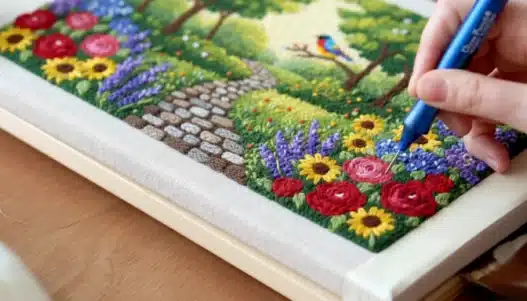
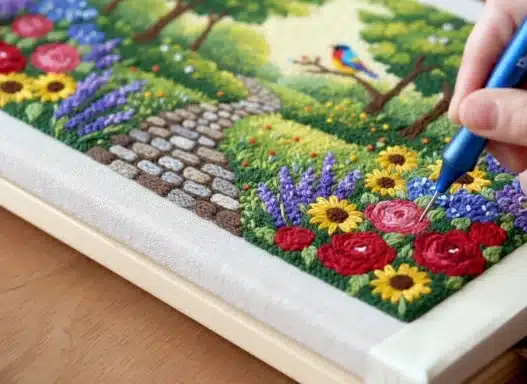
Combining macramé with weaving, dyeing (dip-dye and ombré effects are stunning on cotton cord), embroidery, and even punch needle creates pieces with real depth. This is where hobby craft becomes art practice.
Working with different fibers
Cotton is the beginner default, but jute, hemp, wool, and recycled fibers each behave differently and create different aesthetics. Experimenting with materials is half the fun once your technique is solid.
Designing your own patterns
Most beginners start from patterns — which is smart. But the real satisfaction comes from sketching your own designs: planning knot sequences, calculating cord lengths (the eternal macramé math problem), and watching an original piece take shape.
Your First Three Projects (In Order)
- A simple plant hanger. Teaches lark’s head, square knots, and gathering knots. Functional from day one.
- A small wall hanging. Introduces double half-hitches and pattern planning. This is the piece that makes people say “you made that?”
- Something with a twist — dyed cord, mixed materials, or your own simple pattern. This is where you stop following and start creating.
Common Beginner Mistakes
Cutting cords too short. The classic error. Macramé consumes shocking amounts of cord — the rule of thumb is to cut cords roughly four times your desired finished length. Running out mid-project is a rite of passage; measuring generously is the lesson.
Inconsistent tension. Already mentioned, but worth repeating: aim for even, not tight. Death-grip knotting creates stiff, puckered work.
Skipping the planning. Winging a large piece leads to asymmetry and cord shortages. A quick sketch with measurements saves hours.
Comparing to professionals. The wall hangings that stop your scroll took years to learn. Your lumpy first plant hanger is exactly where everyone started.
Frequently Asked Questions
How long does it take to learn macramé?
The basic knots take an afternoon. Competent, confident work takes a few months of regular practice. It’s one of the fastest crafts to go from zero to “I made something I’m proud of.”
Is macramé expensive as a hobby?
No — it’s one of the cheapest textile crafts. Cord is inexpensive, tools are minimal, and you don’t need a machine, loom, or dedicated space. Costs only rise if you start making large pieces or selling work.
Can I sell macramé pieces?
Yes — wall hangings, plant hangers, and wedding décor sell well on handmade marketplaces. Price for your time, not just materials; beginners chronically undercharge. Our craft guides for selling handmade jewelry and beginner sewing cover the business side of handmade selling in more detail.
Do I need a course, or can I learn from free videos?
You can learn basic knots from free videos, but a structured course saves you from the two big beginner traps: tension problems nobody corrects and cord-length math nobody explains. If you find yourself stuck or making the same mistakes, a course is worth it. Our tips for staying motivated while learning alone help too — crafts have a lonely middle phase where encouragement matters.
What’s the difference between macramé cord types?
Single-twist cord unravels into soft fringe (great for boho wall hangings); braided cord holds its structure (better for bags and plant hangers); 3-ply twisted is the traditional all-rounder. Start with whatever’s cheapest and experiment as you go.