






In the late 1990s, the governor of Georgia proposed spending public money to give every newborn baby in the state a classical music CD. Not for fun — because scientists had supposedly proven that listening to Mozart makes babies smarter. Parenting magazines buzzed, “Baby Mozart” products flooded stores, and a generation of nurseries echoed with piano sonatas.
It all traced back to a single, modest, widely misunderstood experiment. This is the story of the Mozart effect: how ten minutes of piano music became a parenting craze, and what the science actually says about music and your brain.

1993: The paper
It started quietly, in the journal Nature. Psychologist Frances Rauscher and colleagues reported an experiment with 36 college students. Each student took a spatial reasoning test — the kind where you imagine how paper folds and unfolds — under three conditions: after sitting in silence, after listening to a relaxation tape, and after listening to 10 minutes of Mozart’s Sonata for Two Pianos in D major (K.448).
After the Mozart, scores were higher — the equivalent of about 8–9 IQ points on that specific subtest. The press release practically wrote itself: Mozart makes you smarter.
But read the fine print, which almost nobody did. The effect was tiny in duration — it faded within about 10 to 15 minutes. It applied to one narrow skill (spatial-temporal reasoning), not intelligence in general. And the participants were college students, not babies. The paper never claimed that listening to Mozart raises your IQ or makes infants geniuses. It claimed that ten minutes of a stimulating piano sonata temporarily perks up one kind of puzzle-solving. That’s it.
1997–1998: The hype
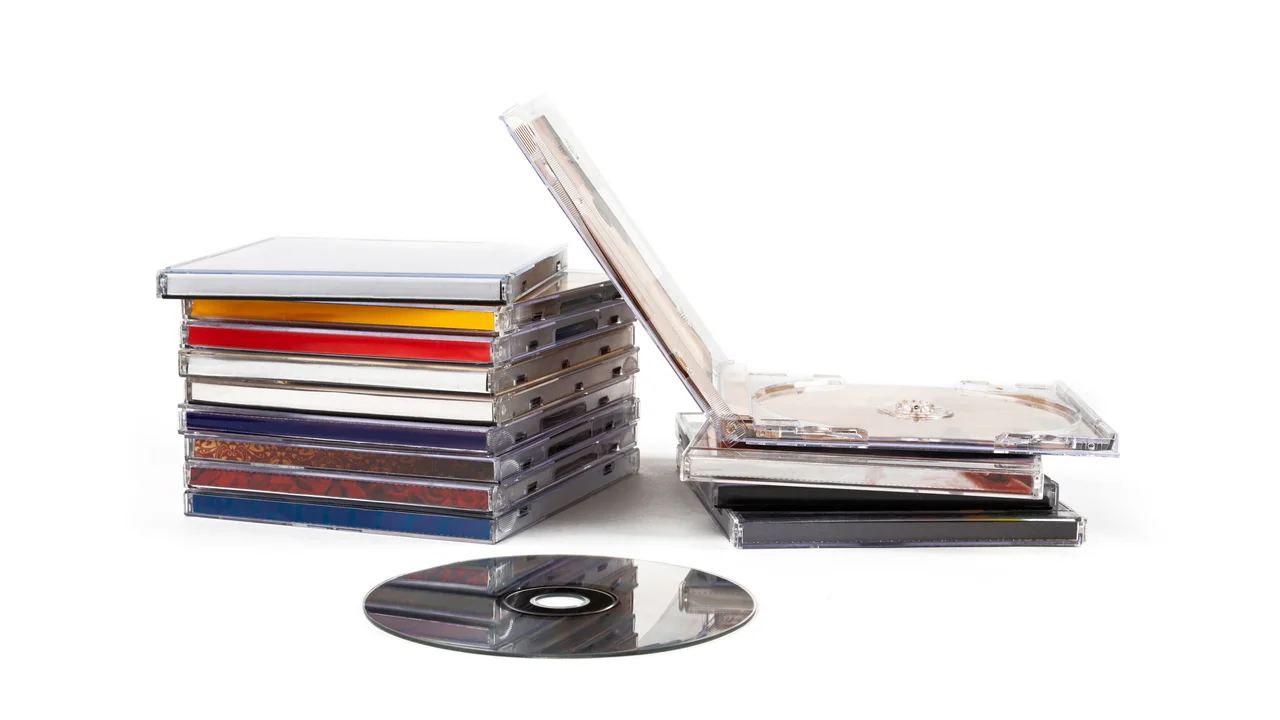
Nuance never stood a chance. By 1997, “the Mozart effect” was a media catchphrase, and in 1998 Georgia governor Zell Miller proposed a $105,000 state budget line to press and distribute classical CDs to every newborn in Georgia. Other states flirted with similar ideas. Parenting books advised pregnant mothers to strap headphones to their bellies.
An entire industry bloomed: “Baby Mozart” videos, “brain-boosting” lullaby albums, toys promising to wire your infant’s neurons through sonatas. The logic leapt from “college students did slightly better at paper-folding puzzles for 15 minutes” to “Mozart permanently upgrades infant brains” — a leap the original researchers never made and repeatedly tried to correct.
1999–2010: The debunk
Meanwhile, scientists tried to replicate the effect — and mostly couldn’t. In 1999, psychologist Christopher Chabris published a meta-analysis finding the effect was small, inconsistent, and short-lived at best. Other labs found that any enjoyable, stimulating music produced the same temporary boost — or that the whole thing vanished under careful controls.
The leading explanation became the arousal-and-mood hypothesis (Thompson, Schellenberg & Husain, 2001): Mozart’s bright, energetic sonata simply put listeners in a good, alert mood — and alert, happy people do slightly better on tests for a few minutes. Play an exciting Blur track instead, and Blur fans got the same boost. It wasn’t Mozart. It was vibes.
By 2010, Glenn Schellenberg’s comprehensive review delivered the verdict: there is no reliable evidence that passive listening to Mozart — or any music — produces lasting cognitive benefits. The effect, insofar as it existed, was a mood lift with a 15-minute expiration date. The governor’s CDs were, scientifically speaking, just nice music.
So does music help studying at all?
The Mozart effect is dead. But the broader question — should you study with music? — has a more interesting, messier answer:
- Mood and arousal genuinely help. If music puts you in a focused, positive state, that state supports learning. The boost comes from you feeling good, not from the notes reorganizing your neurons.
- Lyrics are the enemy of reading. This finding is solid: music with lyrics competes with language processing and measurably hurts reading comprehension and writing quality. Instrumental music is far less disruptive.
- Familiar beats novel. Music you know fades into the background; new music grabs your attention. Your favorite lo-fi playlist works because it’s predictable.
- It’s personal. Some people focus better with background music; others need silence. The research shows big individual differences — which means the only study that matters is the one you run on yourself.
If music is part of your study ritual, the evidence-friendly setup is: instrumental, familiar, moderate volume, and matched to the task — calm for deep reading, upbeat for repetitive review. And if you find yourself reaching for your phone every three minutes to skip tracks, the music isn’t helping; it’s the distraction. That’s a job for distraction blockers, not a better playlist.
The real music-brain connection: learning an instrument
Here’s the irony buried in the Mozart-effect saga: while passive listening does nothing lasting, actively learning music is one of the best-documented cognitive workouts there is. The effect everyone wanted from the CDs is real — it just comes from practice, not playback.
Longitudinal studies following children over years have found that sustained music training is associated with stronger auditory processing, better verbal memory, and improved executive function compared to non-musicians. Brain imaging shows musicians develop denser gray matter in auditory and motor regions — the plasticity is visible. The key difference from the Mozart myth: these are the effects of years of deliberate practice (there’s that phrase again), not ten minutes of listening.
Correlation-versus-causation caveats apply — kids who stick with music lessons may differ in other ways — but randomized training studies point in the same direction. So if the Mozart story left you wishing music could make you smarter, the science has good news with a catch: pick up an instrument, practice deliberately for a few years, and your brain will genuinely change. Nobody ever sold that on a CD cover, because “years of effort” doesn’t move product.
The takeaway
The Mozart effect is a perfect case study in how science gets mangled in transmission: a careful, narrow finding → a catchy name → a media frenzy → a parenting industry → a slow, quiet debunking that nobody puts on a CD cover. If you enjoy the company of a good learning-myth autopsy, here’s another favorite: learning styles are a myth too.
None of this means music is useless for learners. A well-designed home study space with your favorite instrumental playlist can absolutely support deep work — through mood, routine, and the simple pleasure of it. Just don’t expect the sonata to do the studying for you. Your brain still has to show up. Mozart can’t practice for you; he can only keep you company while you do.