




You studied. You knew this. You could recite the Krebs cycle in the shower this morning — and now, staring at question three, your mind is a white wall. Nothing. Not even the faint outline of an answer. This isn’t a character flaw, and it definitely isn’t proof you didn’t prepare. It’s your brain doing exactly what brains do under threat: shutting down the expensive stuff to deal with the emergency.
The good news? The blank-out has a mechanism, which means it has countermeasures. Once you understand what’s happening in your head during those frozen minutes, you can interrupt it — sometimes in under a minute.
Why your brain goes offline: the 30-second neuroscience
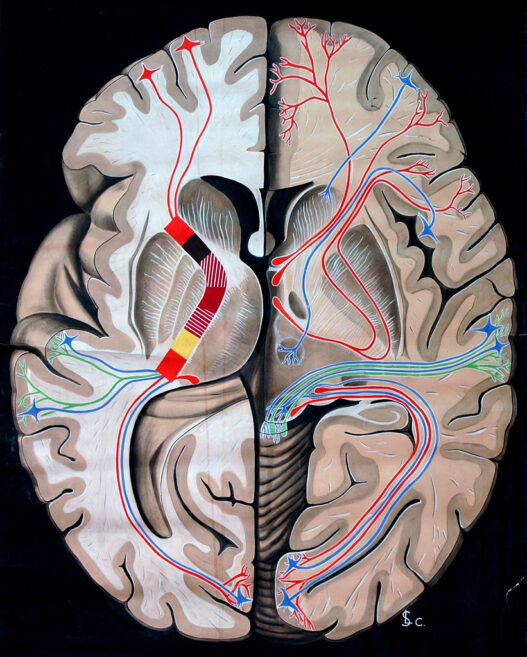
Here’s the short version. Exam stress triggers your amygdala — the brain’s alarm system — which floods your body with cortisol and adrenaline. That’s great if you need to outrun a predator. It’s terrible for recall, because the same alarm system steals resources from your prefrontal cortex, the part of your brain that handles working memory: the mental scratchpad where you hold a question in mind while you search for the answer.
Researchers call this the working memory hijack. Worry is cognitively expensive. Every loop of “I’m going to fail, everyone else is writing, I can’t remember anything” occupies slots in working memory that your actual answers needed. Studies have shown that highly test-anxious students effectively operate with less working memory during exams — not because they have less, but because anxiety is using it up.
There’s a cruel twist: the harder you try to force the memory out, the more you activate the stress response, and the deeper the block gets. It’s like struggling in quicksand. The way out isn’t more force — it’s a different move entirely.
The night before: set up tomorrow’s calm
Most blank-outs are seeded the evening before. You can’t eliminate exam nerves, but you can lower the starting pressure.
Stop studying 60–90 minutes before bed. Late-night cramming raises arousal and wrecks sleep, and sleep is when memories consolidate. A tired brain is an anxious brain — sleep deprivation amplifies amygdala reactivity by a large margin. Trading one more hour of review for real sleep is almost always the better deal.
Pack everything the night before. Pens, ID, water, calculator. Decision fatigue is real, and every small morning panic (“where’s my student card?!”) adds to the cortisol pile before the exam even starts.
Write your worries down. This sounds like a wellness cliché, but it has a genuine study behind it: University of Chicago researchers found that students who spent ten minutes writing about their exam anxieties right before the test performed significantly better than controls. The theory is elegant — offloading worries onto paper frees up the working memory they were occupying. Think of it as closing background apps before running something demanding. If pre-exam dread tends to spiral for you, the same principle helps with the broader imposter syndrome many students carry into testing rooms.

In the exam room: the 60-second reset
Okay, it’s happening. Your mind is blank. Do this, in order:
1. Stop trying to remember (10 seconds). Seriously. Put your pen down. Trying harder is feeding the loop. Give your prefrontal cortex a moment without the demand.
2. Physiological sigh (20 seconds). Two short inhales through the nose, then one long exhale through the mouth. This isn’t generic “just breathe” advice — the double inhale reinflates collapsed air sacs in the lungs, and the extended exhale activates the parasympathetic nervous system. Stanford neuroscientist Andrew Huberman’s lab has shown this pattern reduces stress faster than other breathing techniques. Do it twice.
3. Unclench everything (10 seconds). Jaw, shoulders, hands. Stress lives in the body, and the brain reads body tension as confirmation that the threat is real. Deliberately relaxing your muscles sends the opposite signal.
4. Move to a different question (immediately). Your brain retrieves memories through associations, not brute force. Answering an easier question reactivates related networks, and the “lost” answer often surfaces on its own ten minutes later — the classic tip-of-the-tongue resolution. Flag the blocked question, move on, and trust the background process. It works while you work on other things.
The mindset shift that prevents most blank-outs
Here’s something counterintuitive from the research: trying to calm down can backfire. Telling yourself “relax, relax” when your heart is pounding creates a gap between how you feel and how you think you should feel — which is itself stressful.
Instead, try anxiety reappraisal: tell yourself “I’m excited.” In a well-known Harvard study, people who reframed their pre-performance anxiety as excitement performed better on tests, public speaking, and math tasks than those who tried to calm down. The physiology of anxiety and excitement is nearly identical — pounding heart, alertness, energy. The only difference is the story you tell about it. “My body is gearing up to perform” is a true story, and it’s a much more useful one than “something is wrong with me.”
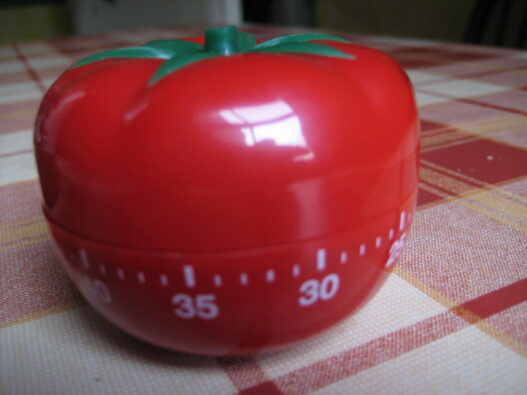
Pair this with realistic preparation rhythms. Marathon study sessions the week before an exam build both knowledge and exhaustion; short, spaced sessions with real breaks keep both sharper. The Pomodoro technique exists precisely for this — and taking effective breaks between sessions lets your brain consolidate instead of just accumulating fatigue.

After the exam: close the loop
The blank-out often continues after you leave the room — answers flood back in the hallway, and the regret spiral begins. Two things help:
Don’t do the post-mortem. Comparing answers with classmates right after an exam is pure downside. You can’t change anything, and every discrepancy you hear will spike the same stress system that caused the problem. Walk away. Listen to music. Eat something.
Debrief once, in writing, then move on. A day later, spend ten minutes noting what actually happened: which questions blocked you, what you did, what helped. Not to punish yourself — to build a personal playbook. “Question 3 blocked me; the breathing reset worked; I should have skipped it sooner.” That’s data. Next exam, you’ll have a protocol instead of a panic.
And remember the big picture: a blank moment in an exam measures your stress response in that hour, not your intelligence or your preparation. The students who look calmest in the exam hall aren’t fearless — they’ve just learned, one reset at a time, how to get their thinking brain back online when the alarm bells ring. Now you know the moves too.