






Walk into any university lecture hall and you’ll see the split: half the room typing furiously on laptops, the other half scribbling in notebooks like it’s 1995. Both camps are convinced they’re doing it right. Both have strong opinions. And for once, science has actually weighed in — with an answer that’s more interesting than either side expects.
This is the great note-taking debate: pen versus keyboard. Let’s look at the evidence, the rebuttals, and the verdict you can actually use.

Round 1: The 2014 study that started the fight
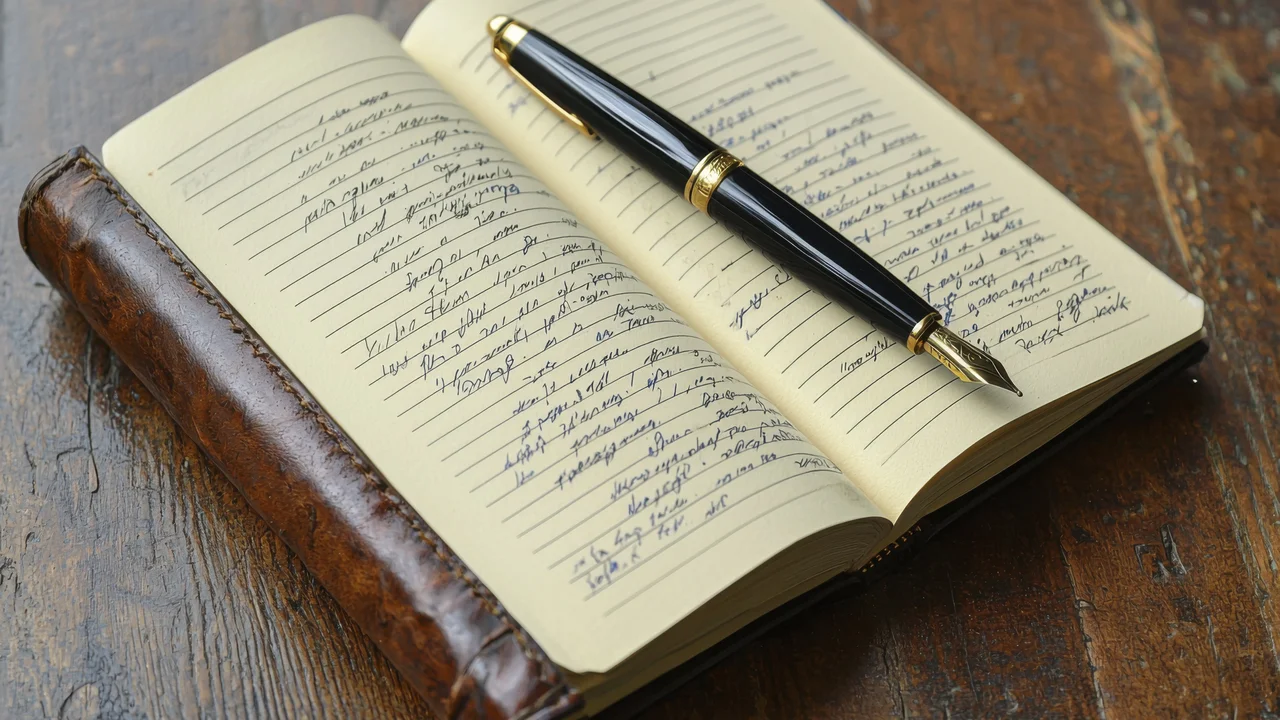
In 2014, psychologists Pam Mueller and Daniel Oppenheimer published a paper with a provocative title: “The Pen Is Mightier Than the Keyboard.” Across three studies, they had students take notes on lectures either by hand or on laptops, then tested them — sometimes immediately, sometimes a week later.
The laptop users had one clear advantage: speed. They captured far more of the lecture word-for-word. But that turned out to be the problem. Because typing is fast enough to transcribe, most laptop note-takers slipped into mindless transcription — copying the lecturer’s words without processing their meaning. Their notes showed high “verbatim overlap” with the lecture: lots of words, little thought.
Handwriters couldn’t keep up, so they were forced to do something valuable: listen, digest, and rephrase. They wrote less, but what they wrote had passed through their own understanding first. And on conceptual questions — the “explain this in your own words” kind, not the “what year was…” kind — the pen-and-paper group consistently won, even when both groups were allowed to review their notes before the test.
Why handwriting wins: the encoding argument
The mechanism has a name: the encoding hypothesis. It says the act of taking notes helps you learn — not just the reviewing later, but the writing itself. Handwriting forces a chain of mental work: comprehend the idea, decide what’s important, translate it into your own words, and physically form the letters. Each step is a little act of processing.
Typing can do all of this — there’s nothing about a keyboard that prevents thinking. But in practice, it usually doesn’t, because the path of least resistance is transcription. Your fingers can move almost as fast as the lecturer talks, so your brain checks out and lets them. Psychologists call this shallow processing: the information passes through your hands without ever stopping at your understanding.
There’s a second, subtler factor: desirable difficulty. Learning science keeps finding that a little friction helps — the mental effort of summarizing is the workout that builds the memory muscle. Handwriting’s slowness isn’t a bug. It’s the feature.
Round 2: The rebuttal — it’s not that simple
Before you throw your laptop away, the other corner deserves its say. And it’s landed some real punches:
- Later replications found a smaller effect. Follow-up studies didn’t always reproduce Mueller and Oppenheimer’s clean result. A broader look at the evidence suggests the handwriting advantage is real but smaller and less consistent than the original headlines claimed — and it depends heavily on the subject, the test format, and how the notes are taken.
- Typing wins on completeness. For fact-heavy lectures — dates, definitions, formulas — having complete, accurate, searchable notes matters. A perfect paraphrase of half the lecture loses to a complete transcript when the exam tests details.
- Review changes the game. The original studies tested conceptual understanding, where processing matters most. But if you diligently review, reorganize, and quiz yourself on typed notes, much of the gap closes. The villain was never the keyboard — it was mindless note-taking in any medium.
- Digital notes are forever. Handwritten notes get lost, can’t be searched, and can’t be backed up. A typed system — especially something like Obsidian — builds a searchable second brain that compounds over years.
Head to head: when to use which
Enough theory. Here’s the practical scorecard:
- Conceptual lectures (philosophy, theory, “explain why”): handwriting wins. The forced summarizing matches exactly what the exam will ask.
- Fact-dense lectures (anatomy, history dates, law): typing wins. Completeness and searchability beat elegant paraphrase.
- Math, diagrams, and sketches: handwriting, no contest. Try drawing a reaction mechanism on a keyboard.
- Building a long-term knowledge base: typing. Your future self will thank you for searchable, backed-up, linkable notes.
- Meetings and fast talkers: typing keeps up; handwriting cherry-picks. Choose based on whether you need everything or just the gist.
The middle ground: stylus on a tablet
There’s a third option the 2014 studies couldn’t test properly, and it’s what a growing number of students actually use: handwriting with a stylus on a tablet. Does digital ink give you the best of both worlds?
In theory, yes — and the logic is sound. You get the slow, generative processing of handwriting (the encoding benefit) plus searchable, backed-up, endlessly reorganizable notes (the digital benefit). You can sketch diagrams, annotate PDFs, and never lose a page again.
In practice, there’s a catch worth knowing: tablets invite the same distractions as laptops. The research on attention suggests that the device matters less than what’s running on it — a tablet with notifications popping up recreates the divided-attention problem in a new form. The students who thrive with stylus setups tend to be ruthless about it: airplane mode during lectures, one note-taking app, no browser tabs. The tool is a hybrid; the discipline still has to be yours.
If you’re tablet-curious, try it for the subjects where handwriting wins (concepts, diagrams, math) and keep the keyboard for fact-dense capture. Let each tool do what it’s best at.
The verdict: it’s not the pen, it’s the processing
Here’s the punchline the debate usually misses: the studies never proved handwriting is magic — they proved mindless transcription is useless. Handwriting just happens to make mindlessness difficult. If you type your notes as concise summaries in your own words, pausing to think instead of transcribing, you get most of the benefit with all of digital’s advantages.
The winning move is a hybrid, and it’s simple:
- Learn by hand, archive by keyboard. Take rough handwritten notes during the lecture (processing mode), then type up a clean, organized version within 24 hours. The rewrite doubles as your first review session.
- Ban verbatim. Whatever the medium, force yourself to rephrase. If your notes could have been generated by a transcription app, you’re not learning — you’re stenographing.
- Upgrade the method, not just the medium. Explore note-taking methods that actually work — Cornell notes, mind maps, the outline method — and pair them with the Feynman technique: after class, explain the concept simply, as if teaching it. If you can’t, your notes need work regardless of what you wrote them with.
So the pen isn’t mightier than the keyboard. The brain is mightier than both — but only when it’s switched on. Pick the tool that keeps yours engaged.