







Every night, while you’re dreaming about showing up to an exam naked (or whatever your subconscious is into), your brain is doing something far more practical: it’s taking out the trash. Literally. Cerebrospinal fluid washes through your brain tissue, flushing away the metabolic garbage that built up while you were awake and thinking.
Scientists only discovered this cleaning system about a decade ago — and it changed how we think about sleep, memory, and why pulling an all-nighter feels like your head is full of static. Here’s the surprisingly simple story of your brain’s night crew.

Meet your brain’s cleaning crew
For a long time, neuroscientists had a puzzle: the brain is the most energy-hungry organ in your body, burning through roughly 20% of your energy despite being only 2% of your weight. All that furious activity produces waste — broken-down proteins, used-up neurotransmitter parts, and a sticky molecule called beta-amyloid that you may have heard of in connection with Alzheimer’s. But the brain has no lymphatic vessels like the rest of the body. So where did the garbage go?
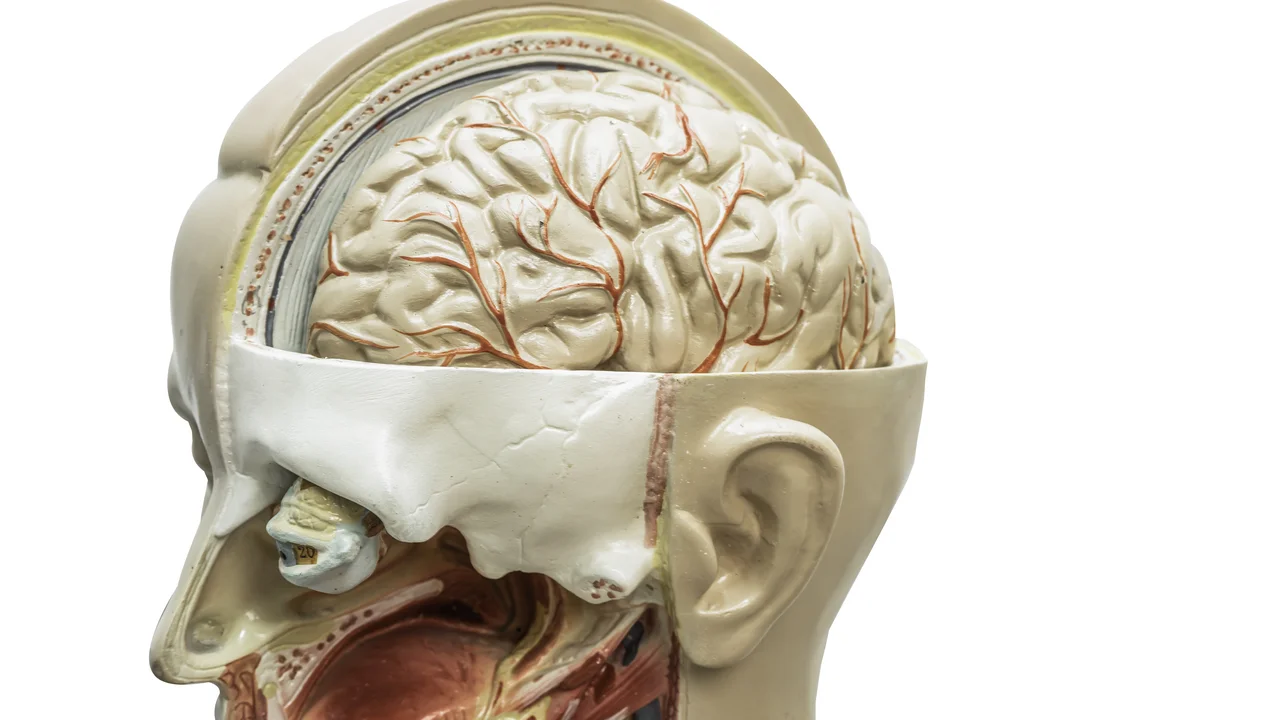
In 2012, a team led by Maiken Nedergaard at the University of Rochester found the answer and named it the glymphatic system — “g” for the glial cells that run it, plus “lymphatic” for the job it does. Here’s how it works: glial cells (the brain’s support crew) form tiny channels along blood vessels. During sleep, cerebrospinal fluid — the clear liquid cushioning your brain — flows through these channels, washing between brain cells and carrying waste out to be disposed of.
The stunning part: in sleeping mice, the spaces between brain cells expanded by about 60%, letting the fluid flow freely — and waste like beta-amyloid was cleared twice as fast as during wakefulness. Sleep, it turns out, is when the brain opens its service tunnels.
What’s actually being washed away
The waste list reads like a “most wanted” poster for brain aging. Beta-amyloid and tau proteins — the same molecules that pile up in Alzheimer’s disease — are cleared by the glymphatic system. So are the ordinary byproducts of a hard day’s thinking: adenosine (the chemical that makes you feel sleepy — caffeine just masks it), dead cell fragments, and excess neurotransmitters.
This isn’t just a mouse story anymore. In a 2018 study, researchers found that a single night of sleep deprivation measurably increased beta-amyloid buildup in the hippocampus and thalamus of healthy human adults — regions critical for memory. One bad night doesn’t cause dementia, to be clear. But it shows the cleaning system is real, it’s working every night, and skipping sleep means skipping the wash cycle while the garbage keeps piling up.
Why students should care (beyond the gross-out factor)
The cleaning isn’t just hygiene — it’s directly tied to how well your brain works the next day. Memories consolidated during sleep are cleaner memories: the replay processes that transfer learning from short-term to long-term storage run better in a freshly washed brain. Researchers have linked poor sleep to worse attention, slower learning, and weaker next-day memory formation — partly because the hippocampus, drowning in metabolic waste, can’t encode efficiently.
Think of the all-nighter in this new light: you’re not just tired. You’re asking your brain to perform its hardest cognitive work — encoding, retrieving, reasoning — in the exact condition where its maintenance was skipped. It’s like demanding peak performance from an engine you refused to service. The “fuzzy head” feeling after a sleepless night isn’t a metaphor. It’s debris.
What about naps? Do they clean too?
Good news for nap enthusiasts: yes, partially. Even a short nap triggers some of the same machinery — memory replay, waste clearance, a reset of the hippocampus’s encoding capacity. Studies have found that a 60–90 minute nap can measurably improve learning afterward, because it includes a full cycle with slow-wave sleep.
The classic 20-minute power nap is a different tool: it clears adenosine and restores alertness without dropping you into deep sleep (which is why you wake up refreshed instead of groggy). It won’t run the full wash cycle, but it empties the sink enough to keep the kitchen working.
The one rule: don’t nap too late. A 4 PM marathon nap steals sleep pressure from the night, and the night shift is when the deep cleaning happens. Early afternoon, under 90 minutes, and you’re golden. Students who treat the post-lunch dip as a strategic nap window instead of a willpower failure tend to learn more in the afternoon hours that follow.
Help your brain clean house
The good news is that supporting the night crew is simple — it’s just the sleep hygiene advice you’ve heard before, now with a much cooler explanation:
- Keep a consistent schedule. The glymphatic system runs on your circadian rhythm. Regular sleep and wake times keep the wash cycle predictable. Weekend sleep marathons don’t fully compensate for weekday deprivation.
- Aim for 7–9 hours. The deep slow-wave sleep of the early night does the heaviest cleaning. Cutting sleep short robs exactly those early cycles.
- Cool, dark, quiet. Your brain cleans best when sleep is deep and uninterrupted. A cool room (around 18°C / 65°F), darkness, and minimal noise aren’t luxuries — they’re working conditions for the crew.
- Never all-nighter before an exam. Trading the night’s cleaning and memory consolidation for a few more hours of cramming is the worst deal in studying. Review, then sleep — your brain will literally wash and file what you learned.
- Build the habit, not the heroics. One good night helps; a consistent routine transforms. If sleep always loses to your schedule, it’s worth building a learning habit that sticks — one that treats rest as part of the system, not the enemy of it. And remember that rest includes your waking hours too: taking effective breaks while studying keeps the daytime waste from overwhelming the nighttime cleanup.

There’s something quietly beautiful about this discovery. For centuries, sleep looked like wasted time — eight hours of doing nothing. Now we know it’s the busiest shift of the day for the organ that makes you you: sorting memories, washing out toxins, resetting for tomorrow. So tonight, when you close the laptop and turn off the light, picture the crew clocking in. They’re doing the studying you can’t do awake. The least you can do is let them work.