






Read this sentence. In the time it took you — maybe five seconds — the internet sent around 19 million emails, processed half a million Google searches, and uploaded 40 hours of video to YouTube. The modern internet doesn’t just run fast. It runs at a scale that breaks human intuition.
Every year, the cloud company Domo publishes a report called “Data Never Sleeps,” tallying what happens online in a single minute. The numbers below come from recent editions of that report and similar industry estimates — they’re approximations, and they keep growing, but they give you the honest shape of something almost impossible to picture. Here are seven of the wildest.

1. Around 230 million emails fly out every 60 seconds
Yes, email — the technology your grandparents use and your group chat mocks — is still the undisputed heavyweight. Roughly 230 million emails are sent every minute, which works out to more than 330 billion a day. For context, that’s about 40 emails per day for every human on Earth, babies included.
Before you picture humanity as history’s most diligent correspondents, know that the majority of this is automated: receipts, notifications, newsletters, password resets, and a truly heroic volume of spam. The personal email you write to an actual human is a rounding error in this flood — which is exactly why learning to write one that gets read is still a superpower. If you’re building an audience online, by the way, understanding this attention economy is step one — our guide to content creation courses covers how creators cut through noise like this.
2. Nearly 6 million Google searches per minute
Every sixty seconds, the world asks Google roughly 5.9 million questions. That’s nearly 100,000 searches per second — about 8.5 billion a day. “What time is it in Tokyo,” “why does my cat stare at me,” “symptoms I should definitely not google at 2 a.m.” — the full spectrum of human curiosity, quantified.
Here’s the part that should interest you as a learner: a huge share of those searches are people trying to learn something. The search box has quietly become humanity’s biggest classroom. The difference between people who learn fast online and people who drown in tabs usually isn’t intelligence — it’s knowing how to search, filter, and verify. Which brings us to…
3. 500 hours of video hit YouTube every minute
Every minute, creators upload 500 hours of video to YouTube. Let that land: in the 60 seconds you spent reading this section, humanity added three weeks of nonstop viewing to the platform. In a single day, that’s 720,000 hours — it would take you over 82 years to watch one day’s uploads.
This is both the greatest free university ever built and the greatest distraction machine ever built, and they’re the same machine. The algorithm doesn’t care whether you watch a calculus lecture or a 40-minute video essay about a cartoon. The skill isn’t finding good content — there’s an ocean of it — it’s protecting your attention once you’re in the water. If YouTube is where you study, learning from YouTube without getting distracted is practically a survival guide.

4. Around 69 million WhatsApp messages per minute
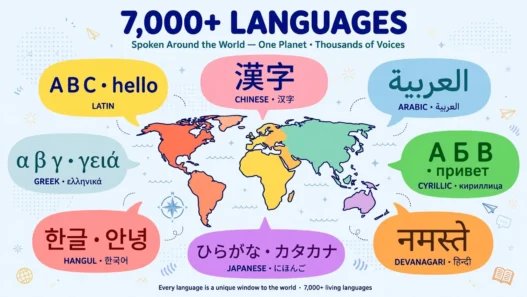
Texting, but make it global: roughly 69 million messages move through WhatsApp every minute — over 100 billion a day. Add iMessage, Telegram, Messenger, and plain old SMS (another ~16 million texts per minute), and humanity is essentially running the largest conversation in history, continuously, in thousands of languages, forever.
Think about what that means for language itself. Linguists now study how emoji, voice notes, and reply-threads are evolving grammar in real time. The “60 seconds of the internet” isn’t just a traffic statistic — it’s a living record of how humans communicate changing under our feet.
5. About 1.7 million things shared on Facebook per minute
Every minute, Facebook users share roughly 1.7 million pieces of content — posts, photos, links, the works. Instagram adds its own torrent: hundreds of thousands of photos and stories in the same span, plus around 347,000 tweets (or whatever we’re calling them this year) flying out on X.
Here’s a number to sit with: the average person will never see 99.99% of it. What you do see is chosen by recommendation systems optimizing for one thing — keeping you scrolling. Understanding that filter is the first step to thinking clearly about everything the internet shows you, from news to ads to “one weird trick” study advice.
6. Over 450,000 hours of Netflix streamed per minute
While all that uploading and messaging happens, the world is also watching: Netflix alone streams more than 452,000 hours of video every minute. That’s like 50 years of continuous viewing starting… right now. Every minute.
Add YouTube watch time, TikTok (where users watch well over 100 million videos per minute by recent estimates), Twitch, Disney+, and the rest, and video is clearly what the internet is now — not a library you visit, but an environment you live inside. For students, that’s an opportunity disguised as a threat: the same infrastructure that delivers infinite entertainment delivers university lectures, too. The difference is intention.

7. The one that puts it all together: 5+ billion people online
Behind every number above is the real headline: more than 5 billion people — roughly two-thirds of humanity — are now internet users. Every minute, the network absorbs the activity of a population larger than any nation, generating data at a rate no human mind can hold.
And it never pauses. There’s no night shift on the internet, no weekend, no holiday. When you sleep, half the planet is awake and uploading. Data centers — the vast, humming warehouses full of servers that make all of this possible — consume on the order of 1–2% of the world’s electricity just to keep the minute-by-minute miracle running.
So what? Why should you care about these numbers?
Because you’re not just a consumer of this flood — you’re training to be someone who navigates it professionally. Every career you’ll apply for, every business you’ll start, every cause you’ll support will live inside these numbers. The people who thrive won’t be the ones who use the internet most; they’ll be the ones who use it most deliberately.
Next time you unlock your phone, remember: you’re dipping a cup into a river that moves 230 million emails a minute. Drink carefully — and maybe, while you’re at it, make something worth adding to the flow. If you’re thinking about creating rather than just consuming, video editing courses for Reels and TikTok are a solid place to start contributing your own 60 seconds.