

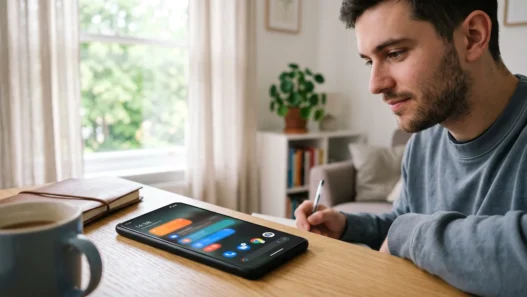



Maya, a sophomore, decided to count. For one week, she tallied every time her phone buzzed, lit up, or chimed during study hours. The total? Over 300 interruptions — roughly one every ten minutes. Group chats, likes, promo emails, a food delivery app reminding her about tacos she didn’t order. None of them were urgent. All of them felt urgent.
She’s not unusual. The average smartphone user receives dozens of push notifications a day, and students — juggling group chats, class apps, social media, and side hustles — sit at the high end of that range. We’ve normalized a level of interruption that would have been considered psychological torture in any other context. And then we wonder why we can’t focus.
This is where digital minimalism comes in. Not deleting every app and moving to a cabin — a philosophy of using technology deliberately, so your phone serves your life instead of auctioning off your attention. Here’s how to apply it as a student.
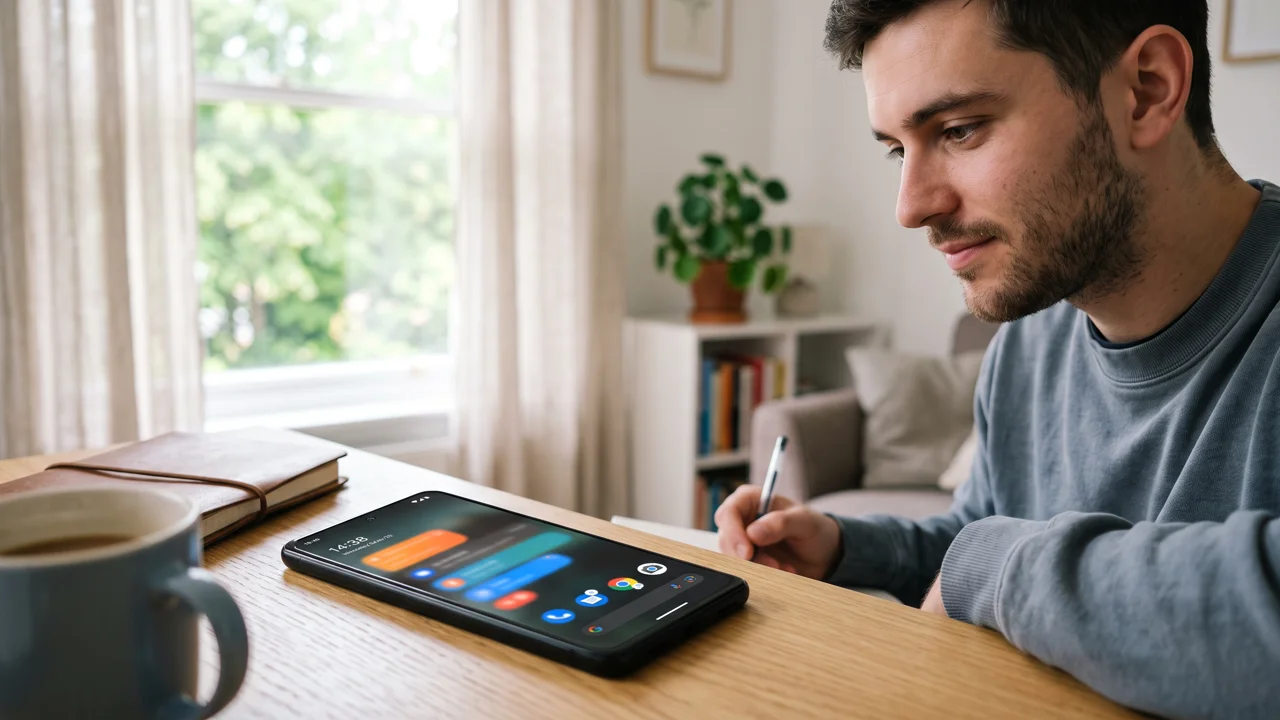
Your Phone Is a Slot Machine (By Design)
Notifications aren’t random. They’re engineered around one of the most powerful psychological principles ever discovered: the variable reward schedule. Slot machines use it. So does your lock screen. Sometimes a buzz is a message from your crush; sometimes it’s a coupon. Your brain can’t tell in advance, so it checks every single time, flooded with a little hit of dopamine either way.
Tech designers know this. Former Google design ethicist Tristan Harris has spent years explaining how apps are built to hijack attention — infinite scroll, red badges, streaks, autoplay. None of these exist because users asked for them. They exist because your attention is the product being sold to advertisers.
Understanding this isn’t about paranoia. It’s about recognizing that willpower alone can’t beat an industry of engineers whose full-time job is keeping you scrolling. You don’t need more discipline. You need a better environment.
What the Pings Actually Cost You
Here’s what the research says about constant interruption:
- Attention residue: Psychologist Sophie Leroy found that when you switch tasks, part of your mind stays stuck on the previous one. Every “quick check” of your phone leaves residue that degrades your focus on what you return to.
- The refocus penalty: Research by Gloria Mark at UC Irvine found it takes an average of around 23 minutes to fully return to a task after an interruption. Even if you only glanced at your phone for ten seconds, the cognitive cost lingers.
- Shallower work: Students who keep phones nearby — even face-down and silenced — perform worse on attention and memory tasks than those whose phones are in another room. Just knowing it’s there taxes your brain.
Multiply one interruption every ten minutes by a three-hour study session and you start to see why “I studied all evening” so often ends with “I remember nothing.”

Digital Minimalism, Student Edition
Writer Cal Newport, who coined the term digital minimalism, defines it as “a philosophy of technology use in which you focus your online time on a small number of carefully selected activities that strongly support things you value, and then happily miss out on everything else.”
For a student, that translates to a simple question: does this app, notification, or habit directly serve something I care about — my grades, my health, my real relationships? If the honest answer is no, it goes.
This isn’t about purity or suffering. It’s a cost-benefit analysis. Social media isn’t evil; but if Instagram costs you 90 minutes of scattered attention a day and gives you back memes and mild anxiety, that’s a bad trade. Keep the apps that earn their place. Evict the rest.
The 30-Minute Notification Audit
Ready for the practical part? Grab your phone and do this now:
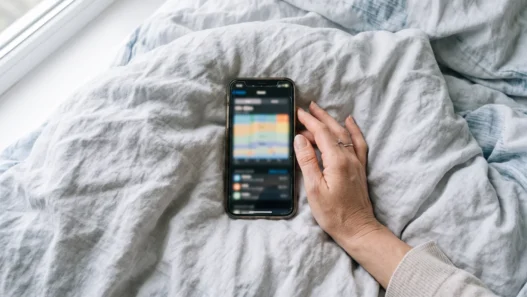
- List every app allowed to send notifications. (Settings → Notifications on both iOS and Android.) You’ll probably be surprised. Maya found 47.
- Keep only three categories: messages from real humans, calendar/reminders you set yourself, and genuine emergencies (calls, security alerts). Everything else gets silenced.
- Delete or bury the worst offenders. Social media, news, shopping, and games don’t need push access to your brain. Check them on your schedule — twice a day is plenty.
- Kill the red badges. Those little red numbers are pure slot-machine design. Turn off badge icons for everything except messaging.
- Set up Focus/Do Not Disturb schedules. Both iOS and Android let you auto-silence everything during class hours and study blocks, while letting calls from favorites through.
If you want backup, distraction blockers like Cold Turkey and Freedom can enforce the boundaries your willpower can’t — and the Forest app turns staying off your phone into a game where focus literally grows trees.
What a Minimal Phone Actually Looks Like
After the audit, your phone should be boring. That’s the goal. A minimal student phone has:
- A home screen with only tools: calendar, notes, camera, maps, maybe a task manager.
- Social media (if you keep it) buried in a folder on the last screen — or deleted and accessed via browser.
- Grayscale mode available for evenings (Settings → Accessibility). Color is part of the hook; gray is dramatically less tempting.
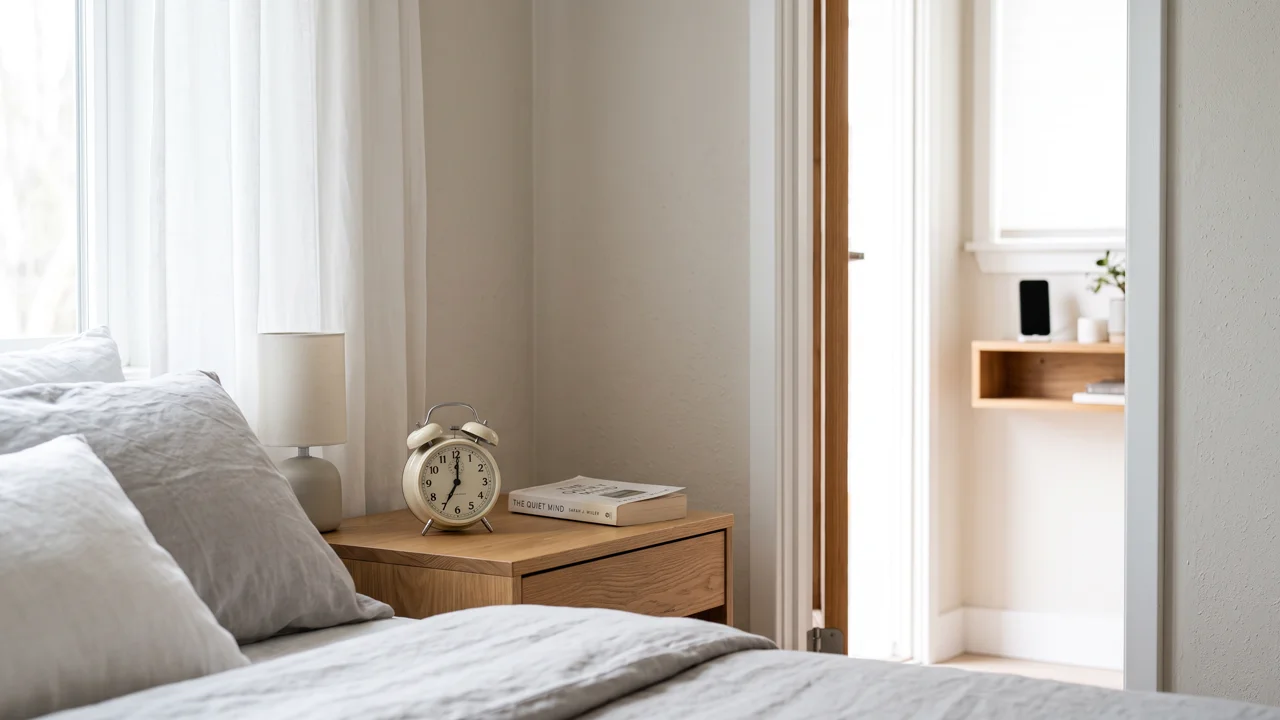
- Charge it overnight outside the bedroom. A $10 alarm clock is the best focus investment you’ll ever make.
The Part Nobody Talks About: FOMO
Here’s the honest truth: the first week of taming notifications feels weird. You’ll reach for your phone and find nothing. You’ll worry you’re missing something. That itch is the addiction talking, not reality.
But here’s what actually happens: nothing urgent is ever a push notification. Real emergencies come as phone calls. Everything else — the memes, the takes, the flash sales — waits patiently for your twice-daily check-in. And the world keeps spinning.
What you get back is enormous: deeper focus, better grades, actual boredom (which is where creativity lives), and evenings that feel like yours instead of a blur of pings. Maya’s GPA went up half a point the semester she did the audit. Correlation isn’t causation — but she’ll tell you the quiet was worth it either way.
Start with the audit. Thirty minutes, one time. Your attention is the most valuable thing you own — stop giving it away for free.
And if the bigger challenge is staying motivated once the distractions are gone, our guide to staying motivated when learning alone picks up where this leaves off.