





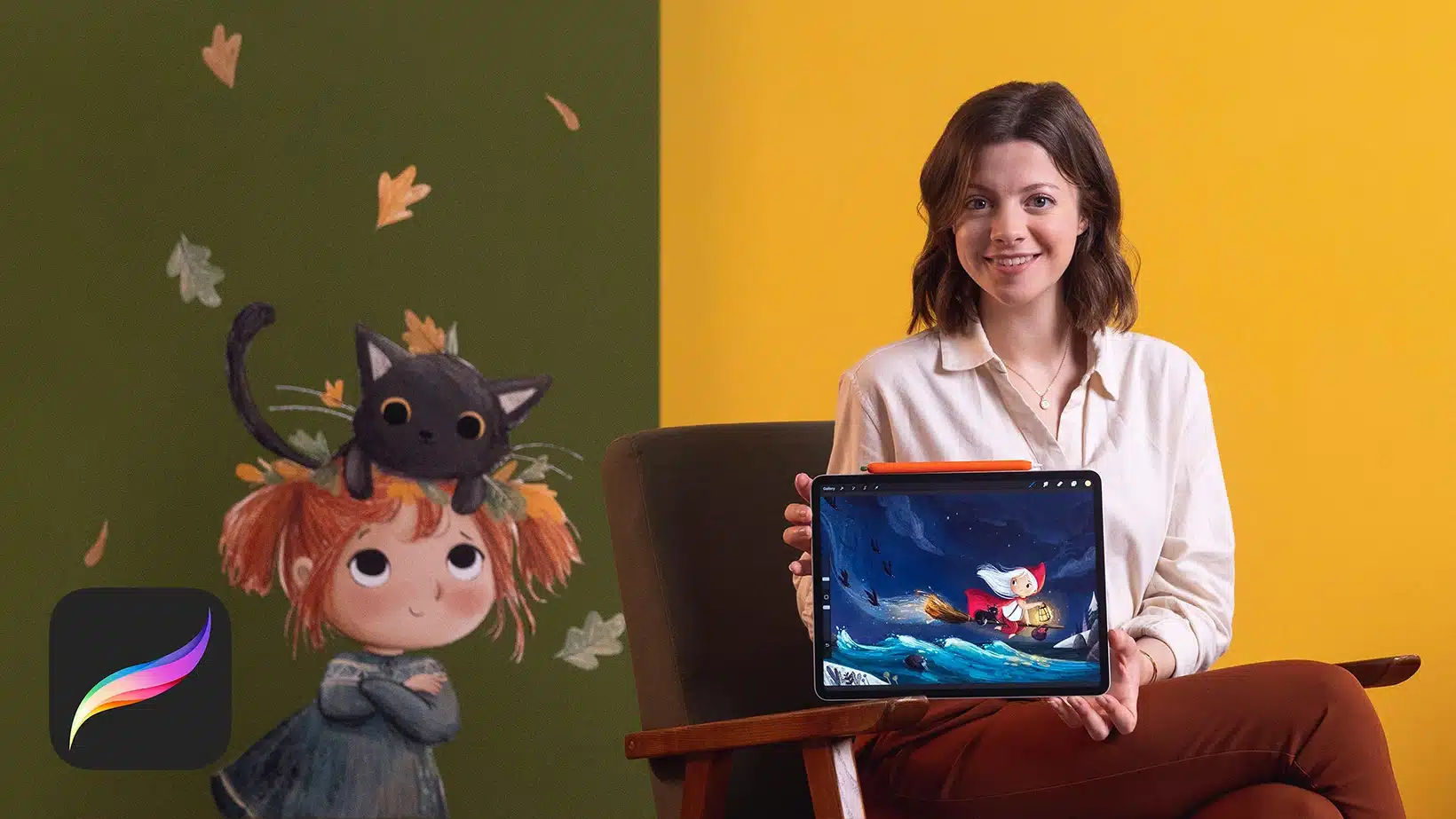
When Priya’s daughter turned four, Priya wanted to make her a picture book — not a bought one, a real one, with a brave little fox who looked suspiciously like the family dog. She’d never illustrated anything in her life. Eight months later, she had a printed book, forty pages, fox and all. She made it on her iPad, in Procreate, learning as she went.
Children’s illustration has one of the lowest barriers to entry of any art career and one of the warmest audiences. Kids don’t care about your credentials; they care whether the dragon looks friendly. Here’s how to learn it.
Why Children’s Illustration Is a Great Skill to Learn
Picture books, educational apps, magazines, packaging, greeting cards — illustrated characters for young audiences are everywhere. It’s also a field where a distinctive personal style matters more than technical perfection. Some of the most beloved children’s illustrators work in deliberately simple styles.
And the tools have never been more accessible. You don’t need a studio, expensive paints, or a scanner. An iPad, an Apple Pencil, and Procreate — a one-time purchase app — is a complete professional setup.
Getting Started with Procreate
If you’ve never opened Procreate, the first week is about getting comfortable with digital basics:
- Brushes: Procreate comes with hundreds. For children’s work, you’ll mostly use a handful — a sketching pencil, an inking brush, and a few textured paint brushes. Don’t collect brushes; master five.
- Layers: Think of them as transparent sheets stacked on top of each other. Sketch on one, ink on another, color on a third. Layers let you fix mistakes without starting over — they’re the reason digital illustration is so forgiving for beginners.
- Color palettes: Children’s illustration thrives on limited, harmonious palettes. Procreate lets you save custom palettes, so once you find colors you love, they’re one tap away.
- Canvas setup: Learn to set up the right dimensions and DPI from the start. A book illustration needs print resolution (300 DPI); a social media post doesn’t. Getting this wrong means redoing finished work.
A good beginner course walks you through all of this while you complete actual illustrations — not just tool demos. Look for courses taught by working children’s illustrators whose style you genuinely like, on any of the major online course platforms.
What Children’s Illustration Courses Actually Teach
Beyond the software, a quality course covers the craft-specific skills:
Character design
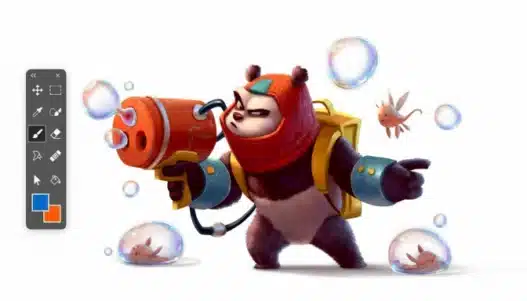
Creating characters that feel alive — appealing shapes, expressive faces, consistent features from every angle. You’ll learn character sheets: the same character drawn front, side, and three-quarter view, plus expressions. Publishers love seeing these; they prove you can keep a character consistent across thirty pages.
Storytelling through scenes
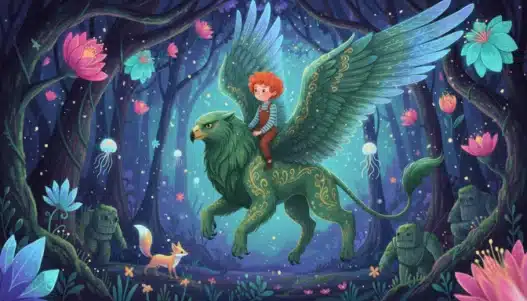
A single illustration should hint at a story. Courses teach composition for narrative — where to place characters, how to guide a child’s eye across the page, how to build a magical scene that feels immersive rather than cluttered.
Color and mood
Warm palettes for cozy scenes, cool blues for nighttime adventure. Children’s books use color emotionally, and learning to control mood with color is a genuine professional skill.
Textures and finishing
The difference between flat digital art and art that feels tactile is texture — paper grain, watercolor edges, crayon roughness. Procreate excels at this, and it’s often what makes student work suddenly look professional.
Building Your First Portfolio
You don’t need a book deal to start. You need five to ten strong pieces that show range: characters, scenes, different moods. Here’s a practical path:
- Illustrate a public-domain story. Fairy tales are free source material. Redo Little Red Riding Hood in your style — instant portfolio project with a built-in narrative.
- Do a “draw this in your style” challenge. These circulate on social media and get your work in front of other illustrators.
- Create a mini book dummy. Even six pages — thumbnails, two finished spreads — shows publishers you understand sequential storytelling.
- Post consistently. Children’s illustration has a huge, supportive community online. Regular posting is how most working illustrators got noticed.
Our guide to building a portfolio while you learn has more on turning practice pieces into a body of work that opens doors.
Beginner Mistakes to Avoid
Copying one artist’s style too closely. Studying artists you love is great; producing work that’s indistinguishable from theirs won’t get you hired. Aim for “influenced by,” not “identical to.”
Over-detailing everything. Beginners add detail everywhere. Professionals know that a simple background makes the character pop. Restraint reads as confidence.
Ignoring the business side. If you want paid work, learn the basics early: standard contract terms, typical rates, how royalties work. Creative skill gets you noticed; business skill gets you paid.
Waiting until you’re “ready.” You’re ready to share work long before you feel ready. The illustrators with careers are the ones who posted the imperfect early stuff.
Do You Need Formal Training?
No. Children’s illustration is one of the most self-taught-friendly fields in art. What you need is structured learning — a course that takes you from blank canvas to finished piece — plus a lot of drawing. Many successful illustrators learned entirely through course marketplaces and online communities.
That said, art fundamentals help enormously: basic drawing, color theory, composition. If your figures look stiff or your colors clash, a fundamentals course will fix more than another Procreate tutorial. Think of it as learning the language before writing poetry.
Selling Your Illustrations: First Steps Into Paid Work
You don’t need permission to start earning from illustration. Many beginners begin with small, low-pressure gigs while their skills grow: illustrating a friend’s self-published book, creating custom nursery art on commission, selling prints of popular pieces. Each paid project teaches you something courses can’t — working to someone else’s brief, hitting deadlines, handling revisions gracefully.
As your portfolio strengthens, bigger doors open: educational publishers, children’s magazines, and app developers all hire illustrators regularly. The illustrators who make it aren’t always the most technically skilled; they’re the ones who kept producing, kept sharing, and treated every small gig as a stepping stone.
Frequently Asked Questions
Do I need an iPad Pro, or will a regular iPad work?
A regular iPad with Apple Pencil support runs Procreate perfectly well for learning. The Pro models offer larger canvases and more layers, which matter for professional print work, but they’re not required to start.
How long before I can illustrate a whole book?
Most dedicated beginners can produce respectable portfolio pieces within 3–6 months and a complete short book within a year. Speed comes with practice; your fiftieth illustration will take a fraction of the time your fifth did.
Can you actually make a living from children’s illustration?
Yes, though it usually starts as freelance and side income. Book advances, educational publishing, licensing, and commissions combine into real careers. It helps to diversify — many illustrators also sell prints, teach, or take on commercial work.
Is the market too saturated?
It’s competitive, but “saturated” misunderstands how illustration hiring works. Art directors aren’t looking for the best illustrator in the world; they’re looking for the right style for a specific project. A distinctive voice beats generic competence every time.
If you’re drawn to traditional media too, our roundup of watercolor painting courses worth your time pairs beautifully with digital skills — many illustrators work in both. And if you’re starting a creative pursuit later in life, read our field guide for beginners starting at 30, 40, or 50 — it’s never too late to draw dragons.