









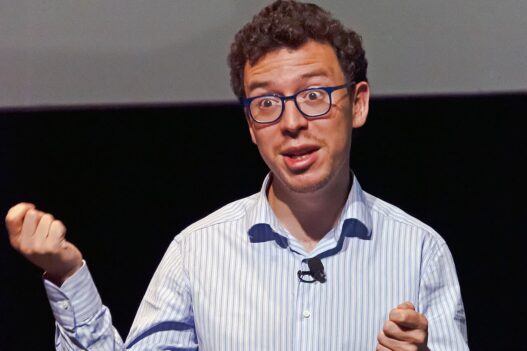
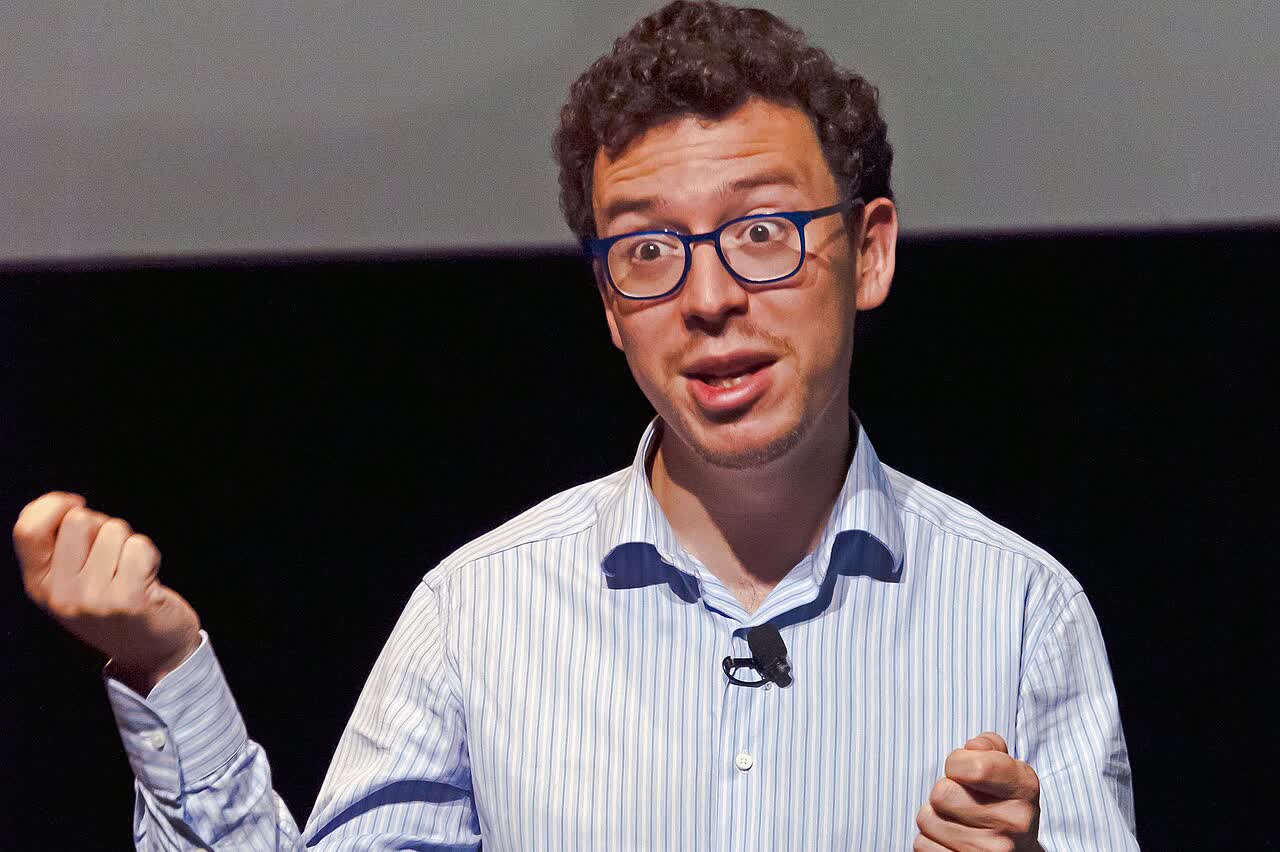
Every language app you’ve ever used has a streak counter, a cartoon mascot, and a notification that guilt-trips you at 9 p.m. That’s not an accident. It’s Duolingo’s invention — or at least, Duolingo is the company that turned those mechanics into the default language of learning apps. But the story starts with a Guatemalan computer scientist who spent his early career teaching computers to tell humans apart from robots.

2011: From CAPTCHAs to classrooms
Luis von Ahn was already famous in tech circles before Duolingo existed. The Carnegie Mellon professor had invented CAPTCHA — those squiggly-letter tests that prove you’re human — and then reCAPTCHA, which he sold to Google in 2009. Here’s the clever part: every time someone solved a reCAPTCHA, they were unknowingly helping digitize books. Millions of tiny human tasks, aggregated into something enormous.
Von Ahn wondered: what if you could do the same thing with language learning? His PhD student, Severin Hacker, helped him build it. The idea was elegant — while people learned a new language, they’d translate real content from the web (Wikipedia articles, CNN pieces), and the translations would improve as learners improved. Learning and labor, fused into one product.
Duolingo launched publicly in late 2011. It was free, it was friendly, and it was built on a genuinely idealistic premise: education should cost nothing, and the crowd could do the work that expensive translators did.
2012–2013: The phone eats the classroom
Duolingo’s iOS app arrived in 2012, with Android following in 2013, and the timing was perfect. Smartphones were becoming the primary computer for billions of people, and language learning turned out to be an ideal phone activity: five minutes in line at the bank, ten minutes on the bus. Lessons were short, visual, and forgiving.
In 2013, Apple named Duolingo its iPhone App of the Year. The company leaned into freemium — the core lessons stayed free while ads and an optional subscription paid the bills — a model von Ahn had insisted on from the start, because charging for content would have excluded the people who needed it most.
2015–2019: The gamification playbook gets written
This is the era when Duolingo became Duolingo. Streaks. Experience points. Leagues where you competed against strangers. Lingots, gems, leaderboards. The app borrowed every trick from mobile games and applied them to verb conjugations — and it worked. Daily active users exploded because the app had figured out the hardest problem in education: getting people to come back tomorrow.
Behind the scenes, the business model was also maturing. The original crowdsourced-translation idea faded (machine translation got good, and the unit economics of human translation changed), replaced by subscription revenue — which eventually became the vast majority of income — plus advertising and the Duolingo English Test, a cheaper online alternative to TOEFL and IELTS that universities started accepting.
By 2019, the company was valued at $1.5 billion after a $30 million round. It had over 300 million registered users. The little CAPTCHA side project was now the most popular way to learn a language on Earth.
2021: The IPO
On July 28, 2021, Duolingo went public on the Nasdaq under the ticker DUOL. The IPO was priced at $102 a share — already above the expected range — and the stock opened at $141, popping nearly 39% on its debut. On a fully diluted basis, the company was valued at around $6.5 billion. It raised nearly $521 million in the offering.
Von Ahn told CNBC that morning that Duolingo was “the most popular way to learn languages in the world,” and the numbers backed him up: over 500 million registered users, with revenue growing nearly 100% year over year. A decade earlier it had been a professor’s side project in Pittsburgh. Now it was a public company worth more than many airlines.

2022–2025: The owl becomes a meme, then an AI company
Somewhere along the way, Duo — the big green owl mascot — escaped the app and became an internet celebrity. The memes wrote themselves: Duo as a passive-aggressive stalker, Duo threatening users who broke their streaks, Duo showing up uninvited in everyone’s notifications. Duolingo’s social media team leaned all the way in, and the brand became one of the funniest corporate accounts on TikTok. The owl that once reminded you to practice Spanish was now a pop-culture figure with its own lore — including a famously dramatic “death” stunt in 2025 that the internet treated like a celebrity obituary.
The memes masked a serious strategic shift. In 2023, Duolingo launched Duolingo Max, a premium tier powered by GPT-4 with AI conversation practice and explanations. Then in 2024 and 2025, the company moved aggressively toward AI-generated content — cutting contractor roles, generating more lessons with AI, and declaring itself “AI-first” in a 2025 memo from von Ahn. The move drew criticism from users who worried about quality and from workers who saw their jobs automated. But financially, the bet on AI kept the growth story alive in an industry being rewritten by large language models.
What Duolingo proved
Duolingo’s real innovation was never the lessons — it was the retention engine. Streaks, notifications, leagues: these mechanics are now standard across every learning app, from fitness to finance. If you’re trying to build a learning habit that actually sticks, you’re living in the world Duolingo designed.
It also proved that free can scale. By refusing to charge for core content, Duolingo grew through word of mouth instead of ad spend — a rarity among app businesses — and converted a fraction of hundreds of millions of users into a subscription business worth billions.
Does it actually teach you a language? That’s the eternal debate. Duolingo is brilliant at vocabulary and consistency, weaker at real conversation — which is why pairing it with methods that really work for learning a language online matters. Plenty of learners use it as a daily warm-up alongside tools like Anki for serious memorization. And stories like learning English online opening real doors show what consistent practice can unlock.
From CAPTCHAs to a $6.5 billion IPO to an AI-first future, Duolingo’s arc is the arc of the consumer internet itself: start with a clever hack, make it free, make it addictive, then figure out the money. The owl is still watching. Your streak is still counting. And somewhere, Luis von Ahn is probably wondering what tiny human task he can productize next.