









This is a composite first-person reflection, drawn from the real experiences of adult English learners who studied online — the working parents, the shy beginners, the professionals who needed English for the next step. The voice is illustrative; the journey is real.
My name is Ana. I’m 36, I live in a city where English is not the main language, and two years ago I was terrified of speaking it. Not “a little nervous” — genuinely terrified. My face would go hot, my mind would go blank, and I’d forget words I’d known for years.
Today I run client meetings in English. I negotiate. I make jokes — okay, attempt jokes — and people laugh in the right places. Nobody would guess that I started this journey hiding with my camera off, praying the teacher wouldn’t call on me.
People ask me what method I used, as if there’s a secret. There isn’t. But there are things I learned that no course description ever told me. Here they are.
1. The problem was never my English. It was my shame.
Here’s the truth I didn’t admit for months: I could already read English reasonably well. I’d studied it in school, like everyone. What I couldn’t do was speak — not because I lacked vocabulary, but because every mistake felt like a public humiliation.
My first online conversation class, I kept my camera off and typed in the chat instead of speaking. The teacher — a patient woman named something I’ve forgotten, which feels unfair — gently asked me to unmute. I did. I said maybe six words. My hands were shaking.
What changed wasn’t a technique. It was repetition in a low-stakes environment. Online classes turned out to be perfect for this: I could practice speaking from my kitchen, where nobody could see me blush. Week after week, the fear shrank. Not because I became fluent, but because I survived being imperfect so many times that imperfection stopped feeling dangerous.
If you’re starting out, know this: what really works in online language learning isn’t the fanciest app. It’s the setup that lets you practice without dread.

2. Fifteen minutes beats three hours (I tested this)
In month two, full of enthusiasm, I decided to study three hours every Sunday. It lasted exactly two Sundays. By hour two I’d be scrolling my phone, hating myself, learning nothing.
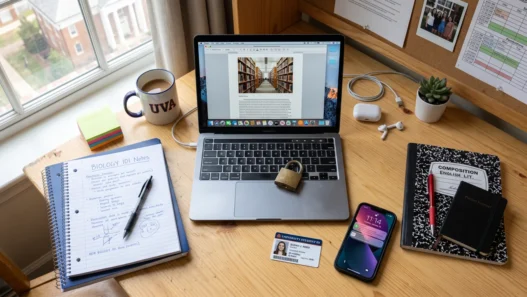
Then I tried the opposite: fifteen minutes every morning with coffee. Just fifteen. Some days it was a short listening exercise. Some days I narrated what I was doing — “I’m making coffee, the water is boiling” — like a lunatic, in English, to no one. It felt stupid. It worked absurdly well.
The science backs this up, but I didn’t need the science — I needed the streak. Building a learning habit that sticks turned out to matter more than any single study session. After six months of daily fifteen-minute sessions, I’d logged more real practice time than in all my years of school English combined.
3. I had to stop translating in my head
For the first year, my process was: hear English → translate to my language → think of a reply → translate back to English → speak. By the time I’d finished, the conversation had moved on. I was always three sentences behind, smiling and nodding like an idiot.
The breakthrough came from an exercise my online tutor gave me: describe everything I could see, in English, without stopping, for two minutes. No translating allowed — if I didn’t know a word, I had to describe around it. “The thing you use to… open the… the cold box.” (Refrigerator. I knew the word. My brain just wouldn’t serve it under pressure.)
Doing this daily for a month rewired something. I stopped reaching for translations and started reaching for English. It was messy. It was also the single biggest leap in my fluency. Thinking directly in the language — even in broken, simple English — beats perfect translated sentences every time.

4. My introversion was an asset, not a problem
I’m not a social person. Group conversation classes exhausted me. For months I thought this meant I wasn’t cut out for language learning — everyone says you have to “just talk to people!”
Then I found my format: one-on-one online sessions, twice a week, with the same tutor. No audience. No performance. Just conversation. It cost less than I expected, and the progress per hour was triple what I’d gotten in group classes. Online learning can be ideal for introverts — you get to design the social load instead of enduring it.
I also discovered that writing helped my speaking. I started journaling in English — bad, simple, honest journaling. “Today was hard. The meeting went okay. I need to learn the word for…” Writing gave me a private space to experiment, and the words I practiced on paper showed up in my mouth weeks later.
5. The plateau at month eight almost broke me
Around month eight, I stopped improving. Or that’s what it felt like. I could handle daily life in English, but meetings still scared me, and my progress had flatlined. I was putting in the same effort for zero visible return.
I almost quit. What stopped me was a friend who’d been through it: “You’re not stuck,” she said. “You’re consolidating. Keep going.” She was right. Around month ten, something clicked — I stopped trying to speak English and just… spoke. The plateau had been my brain rewiring itself underneath. You can’t see foundations being poured, but the house still needs them.
If you’re in a plateau right now: it’s normal, it’s temporary, and quitting during it is the only way to guarantee you never get past it. Learning to stay motivated when learning alone through the flat stretches is the whole game.
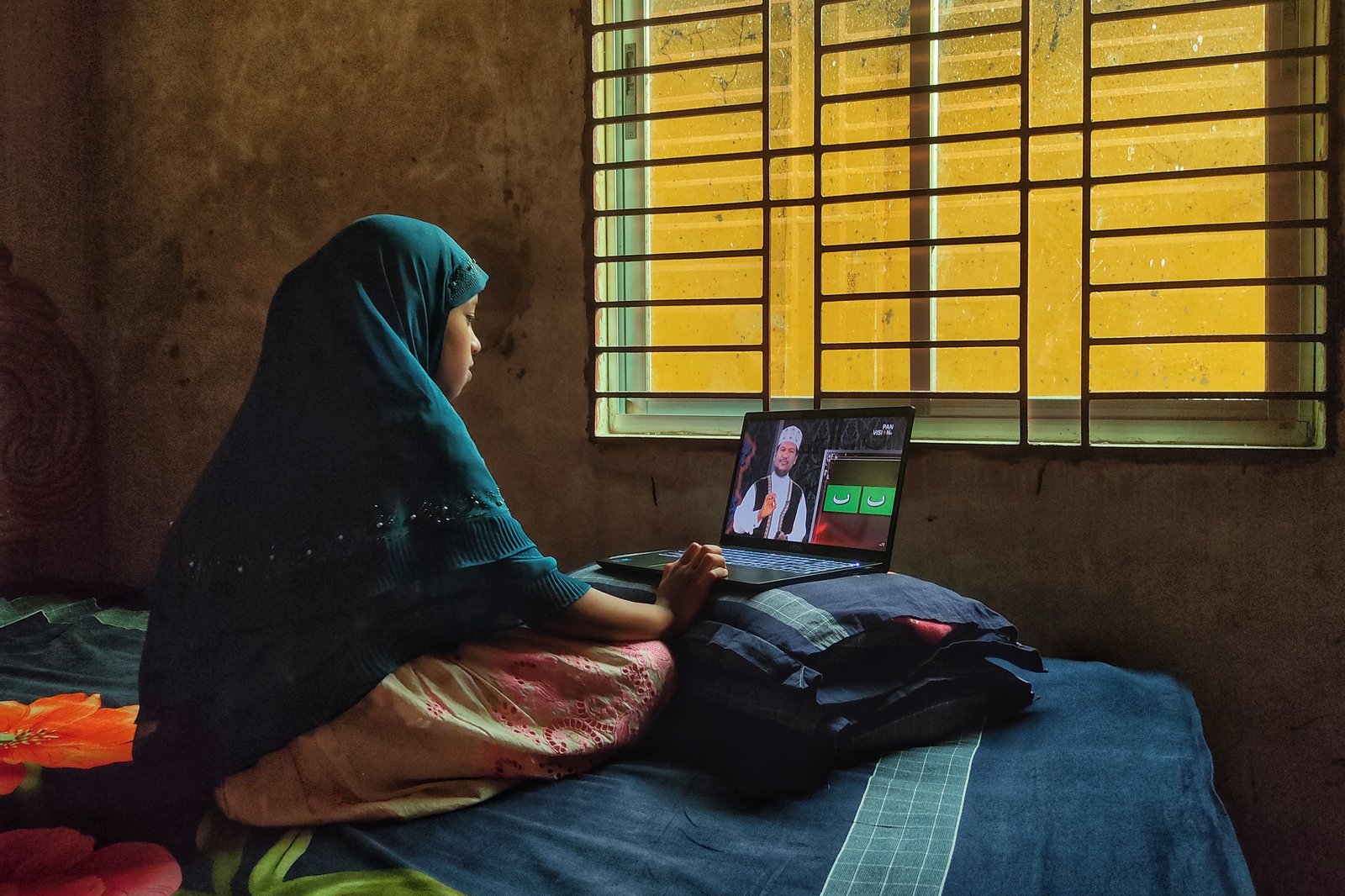
6. English didn’t just change my career. It changed my posture.
Here’s the part nobody warned me about. Yes, English got me the promotion — I can now handle our international clients, and my salary reflects it. That’s the measurable part, the part you can put on a résumé.
But the real change is harder to quantify. I speak up in meetings now — in both languages. I traveled alone last year, something I’d never have attempted before. I helped my daughter with her English homework without feeling like a fraud. I stopped shrinking.
Learning a language as an adult rewires more than vocabulary. It proves to you, daily, that you’re still capable of becoming someone new. That’s not a small thing at 34, when the world starts telling you that you are who you are.
7. I wasted money before I spent it wisely
Confession: in my first month, I bought three different language apps, a “complete fluency bundle,” and a grammar book the size of a brick. Total spent: more than I’d like to admit. Total used: almost none of it.
Here’s what I eventually figured out about free versus paid courses: free is perfect for starting — free apps got me my first 500 words and my daily habit. But free has a ceiling. What finally moved my speaking forward was paying for a real human tutor twice a week. Not expensive — less than my monthly coffee budget — but accountable. You can’t hide from a tutor the way you can hide from an app.
My rule now: free for foundations and habits, paid for the thing free can’t give you — a person who listens, corrects, and won’t let you stay comfortable. Everything else is decoration.
What I’d tell you if we were having coffee
Start embarrassingly small. Fifteen minutes. Camera off if you need to. Nobody’s first month is impressive — mine certainly wasn’t.
Find the format that fits you, not the format that works for extroverts on YouTube. One-on-one, group, app, tutor — the best method is the one you’ll actually do tomorrow.
Speak before you’re ready. You’ll be wrong constantly. That’s the tuition, and it’s free.
And when you hit the plateau — and you will — remember: the fact that it feels like nothing is happening doesn’t mean nothing is happening. I know, because two years ago I was the woman with her camera off, and today I’m the one running the meeting.
One last thing. People will tell you that adults can’t learn languages well, that the window closes after childhood. The research on this is far more encouraging than the myth — adults bring focus, motivation, and learning strategies that children don’t have. My window didn’t close. It was just waiting for me to open it.
The distance between those two versions of me was just a thousand small, unglamorous days of showing up — starting with fifteen quiet minutes and a cup of coffee. ☕🌍
Ready to start? Read about what really works in online language learning, and if you’re learning solo, these tips for studying effectively will help you go further with less burnout.