





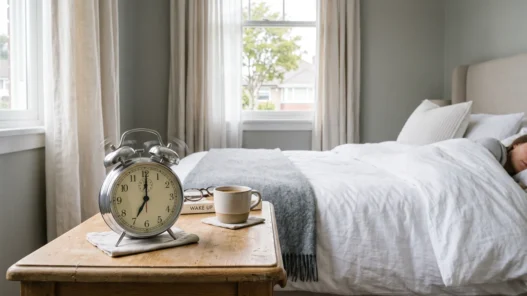
Sleep advice usually comes in two flavors: “sleep 8 hours” (thanks, very helpful between three deadlines) and “sleep is for the weak” (said by people who will burn out by 30). Neither is useful when you’re a student with no time.
So here’s a different approach: seven habits, each backed by actual research, each doable even in a packed week. Not a perfect sleep routine — a minimum effective dose for people who can’t afford the luxury version.
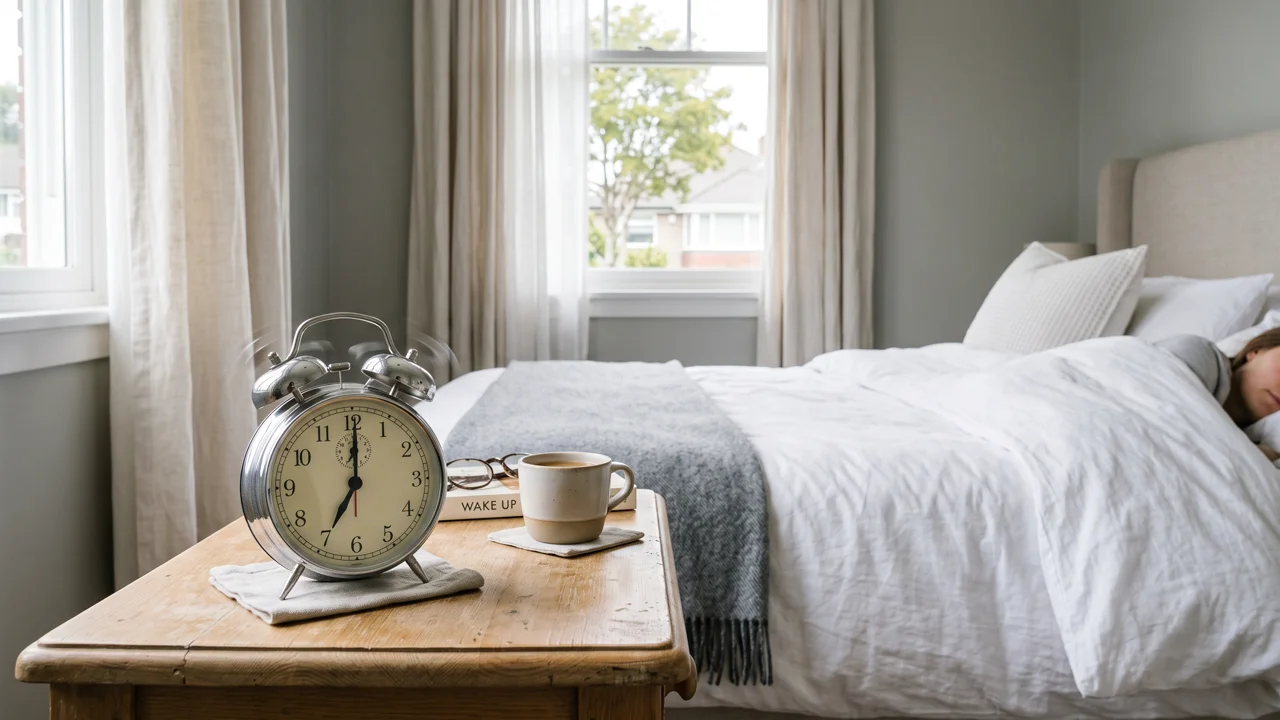
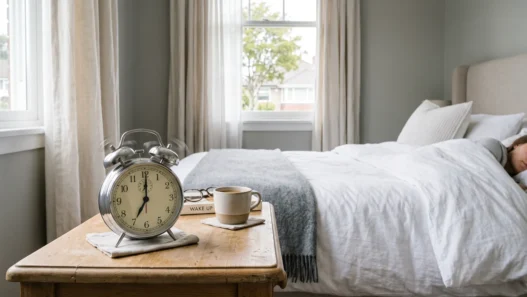
1. Wake Up at the Same Time Every Day (Yes, Weekends Too)
If you take one thing from this article, take this. Sleep scientists are nearly unanimous: a consistent wake time matters more than a consistent bedtime. Your circadian rhythm anchors to when you get up and when you see morning light — everything else follows.
Studies on college students have found that irregular sleep schedules are associated with worse academic performance — in some research, more strongly than total sleep duration. Sleeping 6 hours on a rock-steady schedule beats 8 chaotic hours. Pick a wake time you can keep seven days a week, and defend it like a final exam.
2. Get 7–9 Hours (But Stop Worshipping 8)
The famous “8 hours” is a population average, not a personal prescription. Most adults need somewhere between 7 and 9 hours; some genuinely function well on 7, others need 9. The test is simple: if you need an alarm to wake up and caffeine to function, you’re probably under-sleeping.
Here’s what the data says about skimping: after roughly two weeks of 6-hour nights, cognitive performance drops to the equivalent of one to two full nights without sleep — and the scary part is that people stop noticing. You feel “fine” while performing like you’re drunk. Don’t trust the feeling; trust the math.
3. Make Your Room a Cave
Your brain decides whether it’s night based on light and temperature. Help it out:
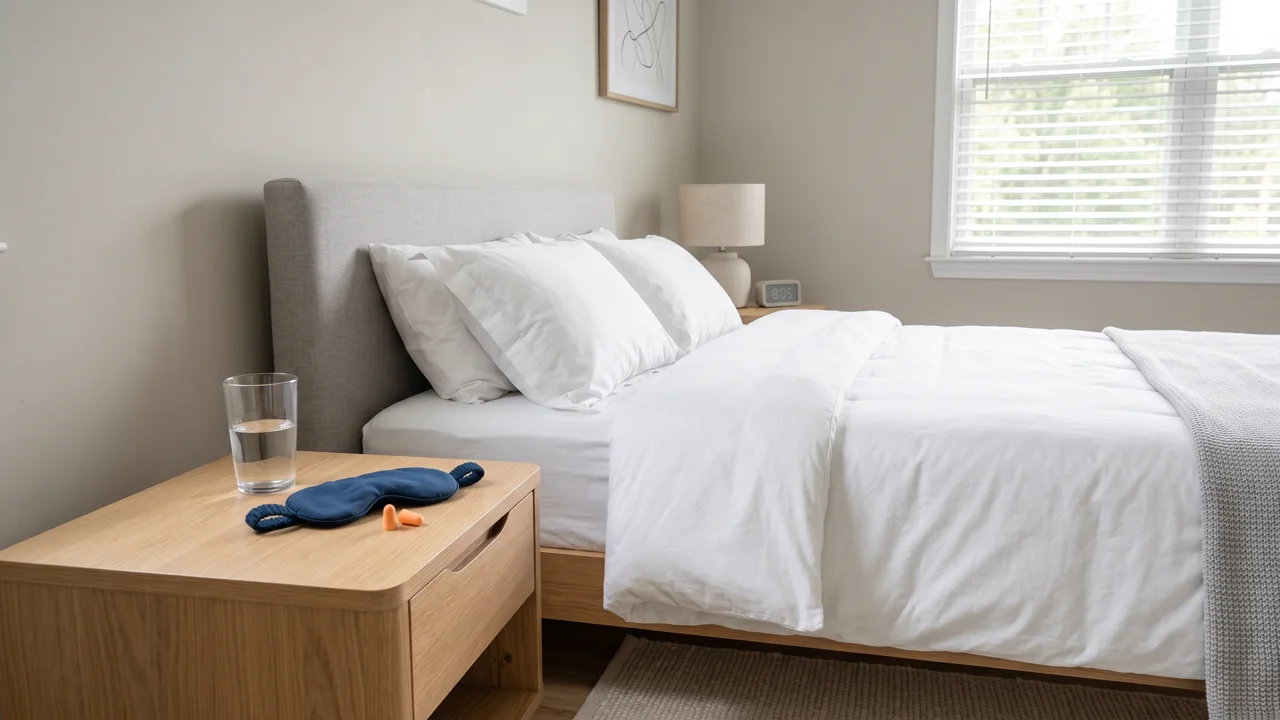
- Dark: Blackout curtains, or a $10 sleep mask. Even small amounts of light during sleep are linked to shallower rest.
- Cool: Around 65°F (18°C) is the sweet spot for most people. Your core body temperature needs to drop to initiate sleep — a cool room does half the work.
- Quiet: Earplugs, white noise, or a fan. Dorm life is loud; your sleep doesn’t have to suffer for it.
Total cost: under $25. Return on investment: enormous.
Student reality check: if blackout curtains aren’t in the budget, a sleep mask does 90% of the job for a few dollars. If your roommate stays up late, earplugs plus white noise from a free app create a surprisingly effective bubble.
4. Set a Caffeine Curfew
Caffeine has a half-life of about 5–6 hours — meaning a coffee at 4 PM is still half-active in your system at 10 PM. Research shows caffeine consumed even 6 hours before bed can cut total sleep by over an hour.
The rule: no caffeine after 2 PM (noon if you’re sensitive). And that 3 PM energy drink “to get through studying”? It’s borrowing energy from tonight’s sleep at terrible interest rates. Switch to a walk, cold water, or a 20-minute nap instead.
5. Screens Down 60 Minutes Before Bed
You’ve heard this one. Here’s why it matters beyond blue light: screens keep your brain in alert, reactive mode — exactly the opposite of the wind-down your nervous system needs. One more “quick” video becomes forty minutes because the apps are designed that way.
Can’t do a full hour? Start with 20 minutes and a boring book. The goal isn’t perfection; it’s giving your brain a landing strip instead of a cliff edge. Charging your phone outside the bedroom (yes, really) makes this dramatically easier.
6. Get Morning Light Within an Hour of Waking
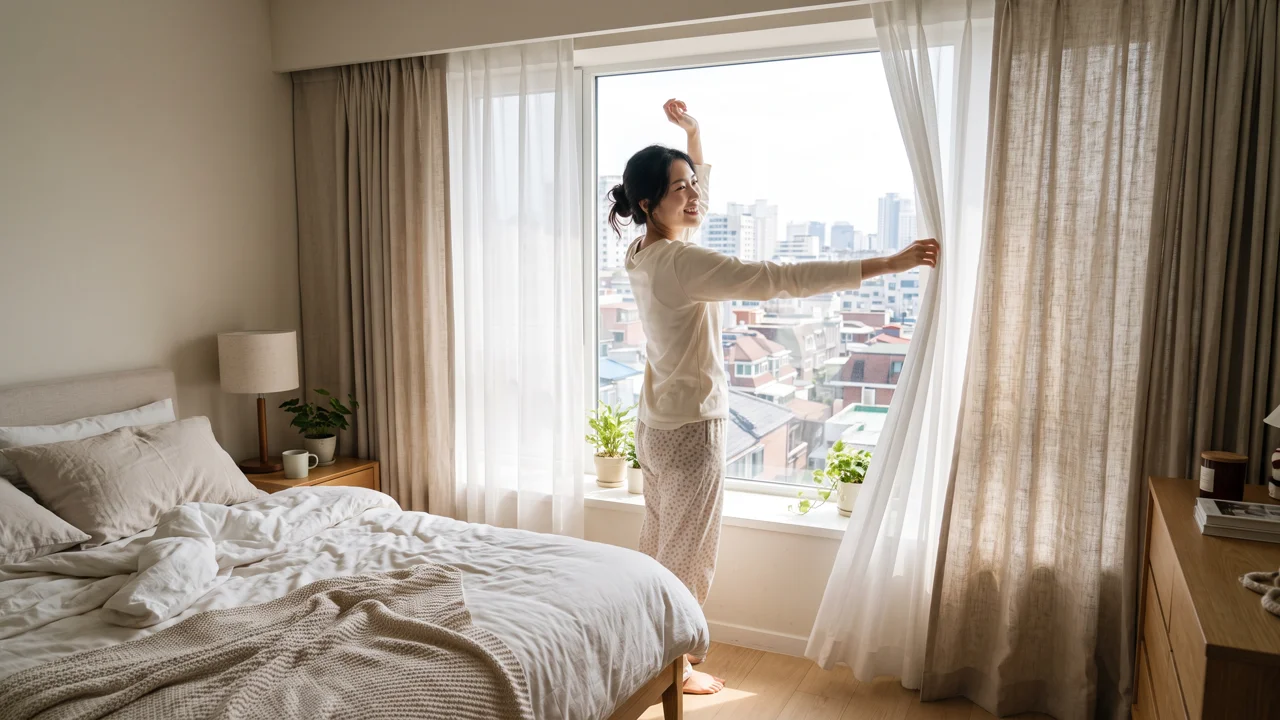
This is the cheapest performance enhancer in existence. Bright light in the morning — ideally sunlight, even on cloudy days — resets your circadian clock and triggers a healthy cortisol pulse that makes you alert now and sleepy at the right time tonight.
Studies show that daytime light exposure, especially in the morning, is linked to better sleep quality and even better mood. Open the blinds. Walk to class the long way. Sit by a window while you have coffee. Ten to fifteen minutes is enough to move the needle.
7. Stop Using Alcohol as a Sleep Aid
A drink might knock you out faster, but alcohol fragments sleep architecture — it suppresses REM sleep in the first half of the night and causes rebound wakefulness in the second. You “sleep” 8 hours and wake up unrefreshed because the sleep you got was low quality.
The same goes for relying on sleep aids long-term without addressing the underlying habits. Fix the schedule, the light, and the caffeine first — for most students, that’s 90% of the problem.
Your One-Week Sleep Reset
Overhauling everything at once fails. Instead, layer the habits across a week:
- Days 1–2: Fix your wake time and get morning light. Nothing else changes yet.
- Days 3–4: Add the caffeine curfew and the cool, dark room.
- Days 5–7: Add the screen wind-down and consistent bedtime.
By day seven you’ll have data: track how you feel each morning on a 1–5 scale. Most people notice the difference by day four or five — and that felt difference is what makes the habits stick long after the “reset week” ends.
Why This Is Really About Grades
Sleep isn’t downtime — it’s when your brain consolidates memories, moving what you studied from fragile short-term storage into durable long-term knowledge. The glymphatic system (yes, that’s its real name) literally flushes metabolic waste from your brain while you sleep. Skipping sleep to study more is like skipping saving to keep typing: the work doesn’t stick.
Research on students has repeatedly found that sleep duration and regularity predict academic performance — pulling all-nighters is one of the most reliably counterproductive study strategies in existence. The students with the best grades aren’t the ones who sleep least. They’re the ones who sleep most consistently.
Pick two habits from this list and start tonight. Your brain does its best work while you’re unconscious — give it the conditions to do it.
Want to make your waking study hours count too? Pair better sleep with effective study breaks and a learning habit that actually sticks.