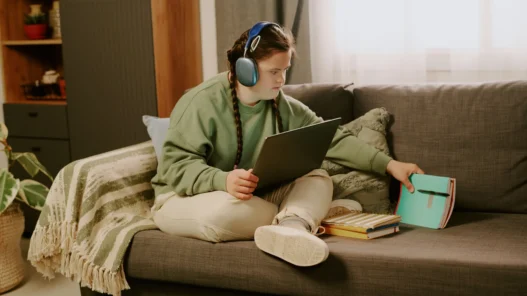




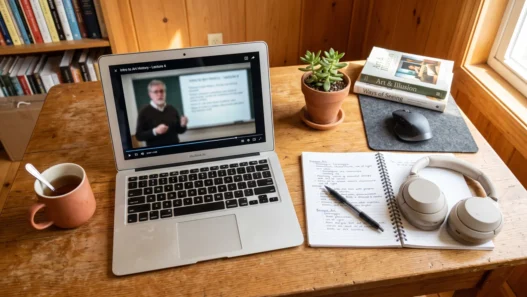



Picture two students. Maya wakes up at 6 AM feeling like a superhero, crushes three chapters before breakfast, and is basically a decorative pillow by 9 PM. Leo can’t form sentences before 10 AM, but at midnight his brain lights up like a stadium and he writes his best essays while the world sleeps. Same species, same 24 hours — completely different operating systems.
This isn’t a character flaw or a discipline problem. It’s a chronotype: your body’s built-in preference for when to sleep, wake, and think. And understanding yours might be the highest-leverage study hack you’re not using.

What a chronotype actually is
Deep in your brain sits a cluster of about 20,000 neurons called the suprachiasmatic nucleus — your master clock. It runs on a cycle slightly longer than 24 hours and uses light cues to stay synced with the day. But the exact timing varies from person to person, largely because of genetics: researchers have identified multiple gene variants linked to whether you’re a morning or evening type.
In the 1970s, researchers Horne and Östberg created the Morningness-Eveningness Questionnaire, still the standard tool for measuring chronotype. The population roughly splits into thirds: around 20–25% strong morning types (“larks”), around 20–25% strong evening types (“owls”), and the rest somewhere in between. It’s a spectrum, not a team jersey.
And it shifts with age in a predictable pattern: kids tend to be morning types, teenagers swing hard toward eveningness (peaking around ages 17–21 — yes, there’s a biological reason your teen years felt like permanent jet lag), and then most people drift back toward morningness as they age.
The synchrony effect: why timing is everything
Here’s the part that matters for your grades. Psychologists have documented a “synchrony effect”: people perform best on demanding cognitive tasks during their own peak hours, not at some universal “best time.” Morning types solve analytical problems better in the morning; evening types do better in the evening. The difference isn’t trivial — studies have measured meaningful gaps in attention, working memory, and reasoning when people work against their chronotype.
This also explains a cruel irony of school: early classes systematically favor larks. An 8 AM exam is a home game for Maya and an away game for Leo — taken at what his body considers the middle of the night. Research on adolescent sleep has found that early school start times disproportionately hurt evening-type students, which is one reason sleep scientists keep arguing for later school starts.
The takeaway isn’t “night owls are doomed.” It’s: schedule your hardest work for your personal peak. If you’re a lark, tackle the dense theory at 8 AM and save the easy review for the evening. If you’re an owl, flip it — do admin and light review in the morning, and unleash the heavy thinking after dinner.
Social jetlag: the hidden tax on your brain
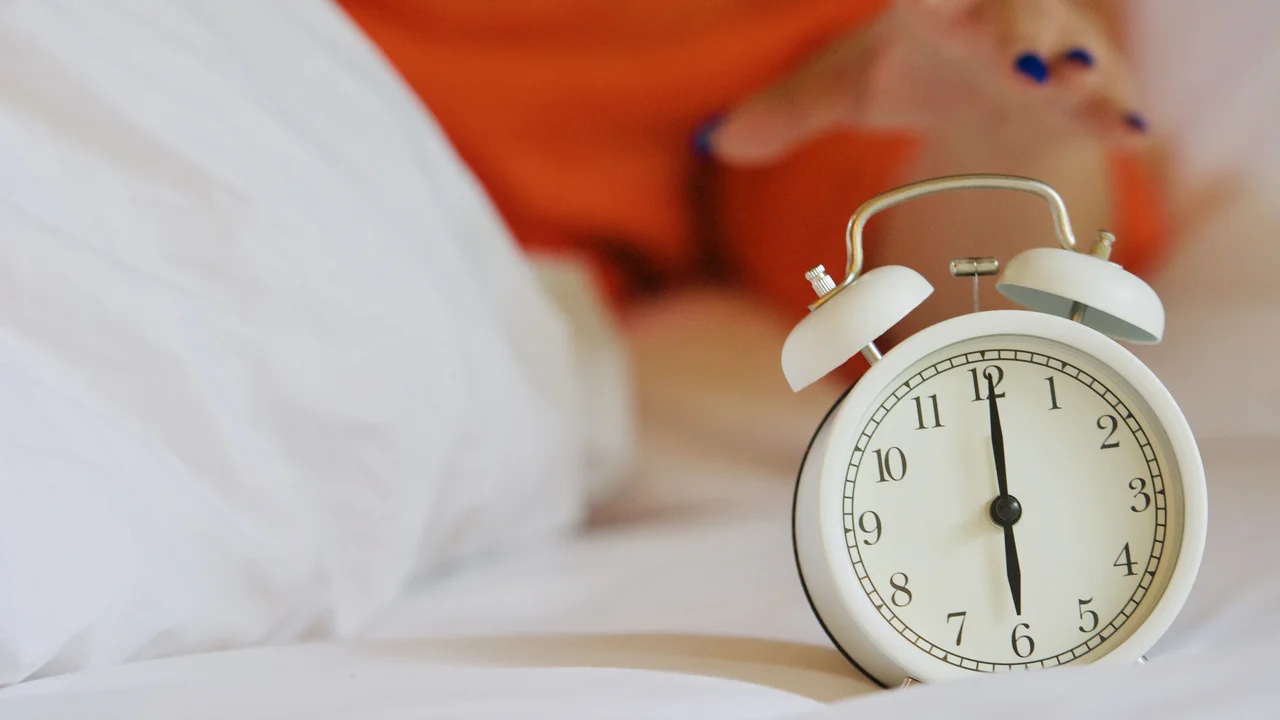
Sleep researcher Till Roenneberg coined a brilliant term: “social jetlag” — the gap between your body’s preferred schedule and the schedule society forces on you. A night owl who naturally sleeps 1 AM to 9 AM but has to wake at 6:30 for class is effectively flying across time zones every single weekday, then “recovering” on weekends. Studies suggest that a large majority of the population experiences at least some social jetlag, and bigger gaps are linked to worse mood, lower academic performance, and poorer health.
You can’t always fix your schedule — but you can shrink the damage. The biggest lever is light: bright light in the morning (even a 20-minute walk) tells your master clock to advance, while screens and bright light late at night push it later. Owls who need to function at 8 AM should front-load their light; larks who want to survive an evening study group should dim the lights after sunset.
Consistency matters more than perfection. Sleeping 1 AM–9 AM every day is better for your brain than swinging between 11 PM–6 AM on weekdays and 3 AM–noon on weekends. Your clock craves regularity.
Finding your chronotype (the honest way)
Forget the quizzes that ask “what’s your spirit animal.” Ask yourself three questions about a free week with no obligations — say, a vacation:
When would you naturally fall asleep? Before 11 PM leans lark; after 1 AM leans owl.
When would you wake up without an alarm? Before 7 AM leans lark; after 9 AM leans owl.
When do you feel sharpest? That window of “my brain is on fire” — morning, afternoon, or late evening — is your peak. Protect it like you’d protect your phone battery at 5%.
Once you know it, design your week around it. This is where a realistic routine beats a heroic one: a night owl who studies from 8–10 PM every day will outlearn a night owl who forces 6 AM sessions and quits by Thursday. And if you’re building new study habits, our guide to making them stick pairs perfectly with chronotype-aware scheduling — the habit that fits your biology is the habit that survives.
One caveat worth knowing: chronotype isn’t destiny, and it isn’t an excuse to never adapt. Shift workers, parents, and students with 8 AM lectures all learn to function outside their peak — humans are remarkably adaptable. The point isn’t “I can’t study in the morning because I’m an owl.” It’s “my morning study will be maybe 80% as effective, so I’ll put the easier tasks there and save the hard stuff for my peak.” Work with the grain, but don’t pretend the grain is a wall.

The bottom line
There’s no universally “best” time to study — there’s only your best time. Chronotype research is clear: working with your biology beats fighting it, every time. The larks don’t have better discipline; the owls don’t have worse character. They just have different clocks.
So stop copying someone else’s 5 AM routine off social media. Find your peak hours, guard them fiercely, and put your hardest work inside them. It’s the closest thing to a free grade boost that science has found.