







Every January, millions of people download a language app, blaze through the first cheerful lessons — “the cat drinks milk,” “where is the library?” — and by March, they’re staring at a 200-day streak and still unable to order coffee. What went wrong? Probably not your talent. Probably the method. Let’s separate what actually works from what’s just marketing.

Myth #1: “You should master the basics before speaking”
The reality: This is the single most damaging idea in language learning, and nearly every successful polyglot disagrees with it. Waiting until you “know enough” to speak is like waiting until you’re fit to go to the gym — the preparation is the activity.
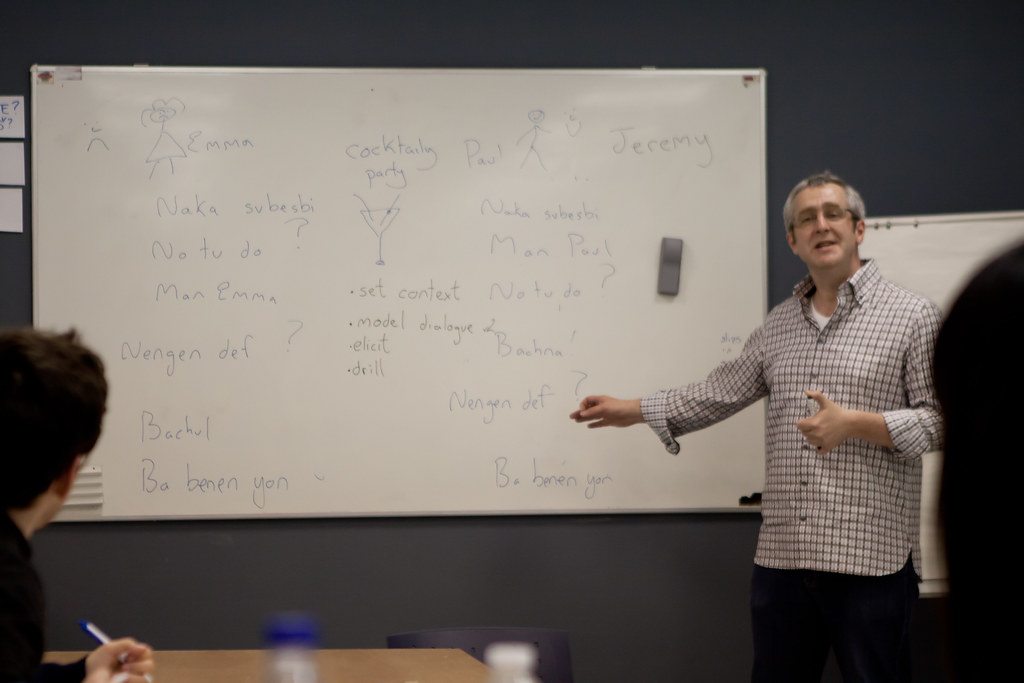
From week one, your goal should be tiny, ugly, real conversations. Order food. Introduce yourself. Ask where the bathroom is and understand the answer. Apps like iTalki or Preply connect you with tutors for the price of a coffee, and many offer 30-minute trial lessons. Your first attempts will be clumsy. That’s not a bug; clumsy is how fluency starts.
Research on language acquisition keeps landing in the same place: comprehensible input plus real interaction beats grammar drills. You need enough input to understand what’s happening (shows, podcasts, graded readers) and enough interaction to force your brain to produce the language.
Myth #2: “An app alone will make you fluent”
The reality: Apps are fantastic components of a routine and terrible entire routines. Duolingo is brilliant at building a daily habit and drilling vocabulary — there’s real evidence that spaced repetition systems like Anki are among the most effective ways to retain words. But an app can’t hear your pronunciation, can’t react when you misunderstand, and can’t give you the messy, unpredictable practice of a real conversation.
Think of it like learning to swim by reading about swimming. Useful background. Not swimming. A solid online setup looks more like this:
- Daily input (20–30 min): a podcast or show slightly above your level, with transcripts if possible
- Vocabulary system (10 min): Anki or a similar SRS app for words you actually encountered
- Speaking (2–3× per week): tutor sessions, language exchange, or even talking to yourself out loud
- Grammar as needed: look it up when it blocks you, not as a separate subject
The learners who plateau are almost always missing the speaking piece. The learners who break through almost always added it.
Myth #3: “Adults can’t learn languages as well as kids”
The reality: Kids have more time and less embarrassment; adults have better study skills, metacognition, and existing language knowledge to build on. Studies comparing adult and child learners find that adults actually learn faster in the early stages — children win only on ultimate accent attainment after many years of immersion.
For an adult learning online, that’s great news. Your advantages — discipline, pattern recognition, the ability to look up grammar explanations — are real. The kid advantage you lack (shamelessness) can be simulated: find a tutor whose job is literally to listen to beginners all day. They’ve heard worse than you. Much worse. 🗣️
If you’re learning as a busy adult, be realistic about the container, not the goal: a realistic after-work routine beats a heroic plan you’ll abandon in week two.
Myth #4: “You need to live abroad to get fluent”
The reality: Immersion helps enormously, but “immersion” is a condition you can build, not a plane ticket you must buy. Plenty of learners reach high levels without leaving home by engineering their environment:
- Switch your phone and social media to the target language
- Follow creators, meme pages, and news accounts in the language — your scrolling becomes study time
- Join Discord servers or online communities where the language is spoken
- Watch shows you already love, dubbed, with subtitles in the target language
- Keep a simple journal: three sentences a day about your life
None of this requires moving to Madrid. It requires about an hour of setup and the willingness to be slightly confused for a while — which, as any learner will tell you, is just the feeling of your brain rewiring itself.
Myth #5: “Some people just don’t have the language gene”
The reality: There’s no language gene. There are differences in working memory and phonetic perception, sure, but they explain a fraction of outcomes. What explains most of it is embarrassingly ordinary: hours of the right kind of practice, sustained over time.
The “talented” language learner you know? Ask them how many hours they’ve logged. It’s always more than you think. The uncomfortable truth is that most people who “can’t learn languages” tried for three months with the wrong method, felt stupid, and quit. The method failed, not the person.
This is where building a habit that actually sticks matters more than any app subscription. Fifteen minutes daily for a year beats two heroic hours every Sunday. Every time.
So What Does a Week Actually Look Like?
Theory is nice; here’s a concrete week for a beginner learning Spanish online, about 30–45 minutes a day:
Monday: 20-minute iTalki session (introductions, present tense) + 10 min adding new words to Anki.
Tuesday: One episode of a beginner podcast with transcript; shadow the speaker out loud.
Wednesday: 15 min Anki review + write 5 sentences about your day; check them with a free AI tool or tutor.
Thursday: 20-minute tutor session; ask them to correct your Wednesday sentences.
Friday: Watch a familiar show dubbed in Spanish with Spanish subtitles. Enjoy it.
Saturday: Anki review + read one short graded-reader story.
Sunday: Off. Seriously. Rest is part of the method.
Total cost: one or two tutor sessions a week plus free tools. Total time: less than most people spend scrolling. After three months of this, you will hold real conversations. Not perfect ones — real ones.
How Long Until You’re Actually Conversational?
The honest answer: with 30–45 focused minutes a day, most learners can hold simple real conversations in 3–6 months and reach comfortable everyday fluency in 12–18 months. That timeline assumes you’re speaking from early on — learners who only do apps often take twice as long to reach the same speaking level, because they’ve been training recognition, not production.
Two things dramatically speed this up. First, volume of speaking: two short tutor sessions a week beats one long one, because your brain consolidates between sessions. Second, narrowness: learn the vocabulary of your life first. If you cook, learn food words. If you work in tech, learn meeting words. Generic course vocabulary (“the postman delivers letters”) is low-value for everyone.
A useful milestone system: after month one, aim to survive a 5-minute small-talk conversation. After month three, a 15-minute conversation about your daily life. After month six, discussing an opinion — a film you liked, a news story. Each milestone is concrete, testable, and motivating in a way “finish chapter 12” never is.
Pronunciation: Earlier Is Better (But It’s Never Too Late)
Many courses treat pronunciation as advanced polish. It’s actually a beginner’s superpower. Spending your first two weeks nailing the sound system — the rolled R, the nasal vowels, the tones — pays compound interest forever, because every word you learn afterward gets stored with the right sounds attached.
The practical approach: find a pronunciation guide on YouTube for your language, mimic out loud (not in your head — out loud), and record yourself on your phone. Compare. Cringe. Repeat. Within a week or two, native speakers will understand you dramatically better, which makes every conversation more rewarding, which makes you practice more. It’s a virtuous circle that starts with making funny faces at your mirror. 🎙️
And when you hit the inevitable plateau around month four — where progress feels invisible — don’t change the method, change the material. Fresh input (a new show, a new tutor, a trip planned in the language) almost always restarts the feeling of progress. Plateaus are usually boredom in disguise.
Quick Answers to Questions Everyone Asks
Should I learn grammar properly first? Learn grammar reactively: when a pattern confuses you in real material, look it up, understand it, then notice it in the wild for a week. Grammar studied in isolation evaporates; grammar learned as the answer to a real question sticks.
Is it okay to use AI chatbots for practice? As a supplement, absolutely — they’re patient, free, and available at 2 a.m. As a replacement for humans, no. A chatbot never misunderstands you the way a real person does, and surviving real misunderstandings is where conversational skill is forged.
What if I freeze every time I try to speak? Lower the stakes, not the frequency. Talk to yourself while cooking. Narrate your walk. Record voice notes you’ll never send. The freeze is a performance reflex, and it thaws with low-pressure reps long before it meets an audience.
The Bottom Line
Learning a language online works when you treat the internet as a toolbox, not a classroom. Apps for vocabulary, tutors for speaking, media for input, communities for motivation. No single product does it all, and anyone selling you one is selling you a subscription, not fluency.
Start speaking this week — badly, briefly, bravely. Your future fluent self is built out of a thousand small, imperfect conversations. The first one is the hardest, and it’s also the one that changes everything. 🌍